


Student Associations Can Extend the Reach of Pediatric Vaccine Services
Student associations can function as public-health delivery partners when they own the coordination work that determines whether a mobile clinic reaches families.
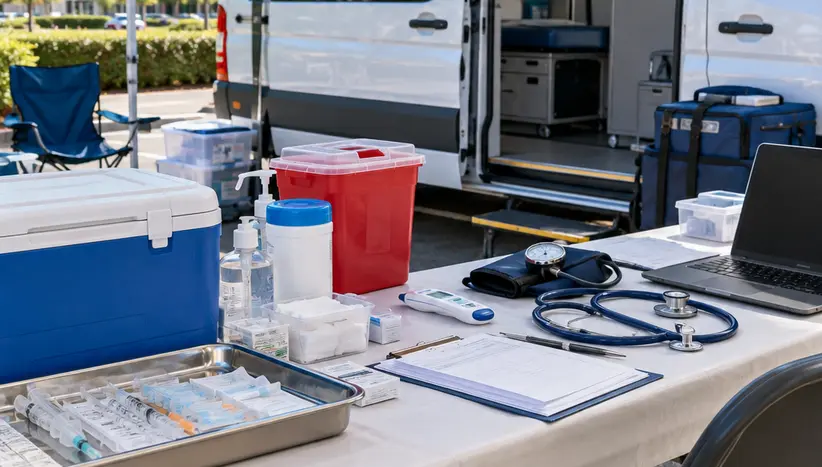
The State University Student Association put that principle into practice by coordinating with local health officials to deliver mobile immunization clinics to underserved families. Student leaders worked in the operational space between an approved health service and the people the service was intended to reach.
That distinction matters. Supporting pediatric vaccination can mean sharing wellness education, distributing resources, or promoting an event. Helping families reach an actual service requires a more demanding set of decisions: who holds clinical authority, where the clinic can operate, which tasks volunteers may perform, and how the team records what happened.
The association’s most useful contribution came from disciplined coordination rather than medical decision-making. Licensed personnel retained control of vaccine handling and clinical procedures. Student leaders could then concentrate on site logistics, volunteer organization, family navigation, and communication within the boundaries established by the authorized clinical team.
This case offers campus groups a practical model for moving from advocacy to implementation. It also sets a clear threshold for credibility. A student association should be able to explain who approved the clinic, who protected family information, and who had authority to stop operations before it presents the effort as a successful health program.
Why Student Leaders Chose Mobile Pediatric Clinics for Underserved Families
The association first considered a weekend clinic at the university recreation center. Families from the target neighborhoods would have needed to travel to campus for vaccination services.
Transit mapping changed the plan. The projected bus trip took 45 to 65 minutes and required two transfers. That finding gave the planning committee a concrete reason to reconsider a campus-centered event. The committee shifted to mobile delivery so the clinic could operate closer to the communities it aimed to serve.
This choice preserved the association’s nonclinical role. A mobile unit changes where access occurs; it does not transfer clinical authority to student volunteers. Qualified health personnel remain responsible for eligibility decisions, consent procedures, vaccine storage, administration, documentation, and responses to medical emergencies.
The transit review also shows why access planning should happen before publicity. Once a campus group announces vaccine availability, families may reasonably treat the location and schedule as dependable. Testing the proposed route first allowed the committee to make an operational decision while the plan was still adjustable.
Other associations can apply the same logic without assuming undocumented barriers. Start with the stated population and examine whether the proposed service location supports the goal of reaching that population. Use direct, verifiable information about the setting. In this case, a mapped 45-to-65-minute journey provided that evidence.
How the Association Turned a Campus Plan into Family Clinics
The pilot ran from mid-September through early November 2022. Within that period, the work followed a sequence that other student associations can inspect and adapt: establish clinical ownership, define student duties, choose operating locations and times, prepare each site, invite families, run the clinic, and review the record.
Assigning Decisions Before Opening a Clinic
Governance comes first because every later task depends on it. A useful case record should identify who approved the initiative, who controlled clinical procedures, who managed volunteers, and who could delay or cancel a clinic. Those answers establish a chain of responsibility for ordinary operations and urgent decisions.
Written role boundaries should delineate volunteer family-navigation duties from licensed vaccine-handling protocols. Student involvement should remain strictly within site coordination rather than clinical eligibility screening. In some jurisdictions, municipal health codes reserve patient scheduling and the handling of intake data for licensed medical personnel, which may narrow the student role further.
That legal constraint deserves attention during planning. The specific rule must be checked for the jurisdiction where a proposed clinic will operate; the State University model cannot establish what another municipality permits.
Preparing a Mobile Pediatric Vaccination Site
Site preparation required a lead time of 14 to 18 days for municipal parking permits and portable power arrangements. That window affected more than paperwork. A clinic could not rely on a curb space or electrical setup that had yet to be secured.
The following categories form a replication checklist. They describe what a new planning team should verify and should not be read as a claim that every item was documented in the State University drive:
- Arrival and placement: vehicle access, legal parking, unloading needs, and a clear route for families.
- Family space: waiting capacity, privacy, accessibility, seating, and safe movement around the mobile unit.
- Site support: sanitation, portable power, lighting, waste handling, and weather contingencies.
- Clinical controls: vaccine storage, consent, eligibility screening, administration, and emergency procedures.
- Information handling: intake, documentation, records transfer, privacy, and follow-up responsibility.
A planning committee should attach an owner and completion date to each applicable item. A checklist without responsibility assignments can hide gaps until opening day.
Operating the Clinics Without Blurring Roles
Volunteer shifts were capped at 3.5 to 4 hours to support sustained attention during family-navigation duties. That detail gives other campus groups a practical staffing unit. It can guide the number of shifts, handoff points, and backup volunteers needed for a clinic day.
Students may help families understand where to wait, direct movement through the site, monitor nonclinical supplies, and relay operational concerns to the correct lead. Questions about vaccine eligibility, consent, symptoms, or clinical records belong with authorized health personnel.
Clear escalation routes keep volunteers from improvising. Each shift should begin with the name of the volunteer manager, the clinical lead, the person responsible for privacy concerns, and the official empowered to pause service.
Reviewing Evidence After Each Clinic
The review plan should exist before the first family arrives. At minimum, organizers need an agreed record of clinic dates, operating hours, locations, volunteer coverage, disruptions, and unresolved follow-up tasks. Clinical partners determine which health records may be collected and who may access them.
This case description documents operational choices. It does not establish vaccine uptake or clinical outcomes because no verified outcome records were supplied. A credible account keeps that boundary visible while preserving the practical lessons that the documented timeline, transit mapping, and staffing rules can support.
Campus Vaccine Drive Readiness Check for Student Associations
Clinic Go/No-Go
Use this check before recruiting families or publicly announcing vaccine availability. The first requirement is a named, authorized clinical lead who accepts responsibility for clinical operations.
- ☐ Record the name, title, organization, and decision authority of the clinical lead.
- ☐ Confirm in writing which organization supplies and stores vaccines.
- ☐ Assign responsibility for eligibility screening, consent, administration, and clinical documentation.
- ☐ Identify who controls intake information, record access, privacy protections, and records transfer.
- ☐ Document the emergency response plan and the person authorized to activate it.
- ☐ Name the organization responsible for post-clinic questions and follow-up.
- ☐ Separate student coordination duties from all licensed clinical tasks.
- ☐ Verify parking approval, power, accessibility, sanitation, waiting space, and weather plans.
- ☐ Set volunteer shift lengths, handoff procedures, and backup coverage.
- ☐ Define what evidence will be collected and who may report it.
A responsibility table can expose omissions quickly. Every row needs one accountable organization, even when several groups contribute.
| Function | Required decision | Written owner needed |
|---|---|---|
| Vaccine supply and storage | Who receives, monitors, and controls vaccine inventory? | Yes |
| Eligibility and consent | Who conducts screening and obtains valid consent? | Yes |
| Administration and records | Who vaccinates and enters the clinical record? | Yes |
| Privacy and emergency response | Who handles protected information and urgent clinical events? | Yes |
| Family navigation | Which directions and nonclinical support may students provide? | Yes |
| Follow-up | Where are families directed after the clinic? | Yes |
If any clinical row lacks an authorized owner, the association is not ready to make a public commitment. Resolve the gap first, record the decision, and repeat the readiness check after any change in location or clinical partner.
What Campus Leaders Should Carry Forward from This Vaccine Drive
Establish Clinical Authority First
A named clinical lead should be in place before volunteer recruitment turns into a public service promise. Written authority clarifies who controls procedures, handles health information, and decides whether conditions support opening the clinic.
Design Access Around Families
The State University committee used transit mapping to test its original location. A 45-to-65-minute trip with two transfers made the recreation-center plan difficult to reconcile with the goal of serving target neighborhoods. Moving the service closer to families aligned the format with the stated purpose.
Define Evidence Before Operations Begin
Organizers should decide in advance which operational and outcome records they can lawfully collect, who maintains them, and what claims those records can support. Otherwise, photographs and volunteer recollections may become substitutes for evidence.
The replicable contribution of a student association is disciplined coordination, not the assumption of medical authority. That contribution includes realistic lead times, bounded volunteer shifts, clear escalation routes, and an honest account of operational limits alongside accomplishments.
A strong case study leaves future organizers with decisions they can inspect. It avoids an unverified success narrative when outcome records are unavailable and gives the next campus group a more reliable starting point.
About the Health Programs Team Behind This Case Study
Dr. Maya Richardson, Family Medicine Physician and Medical Director, prepared this case study through the lens of family health, preventive care, and community-based primary care. Her program focus includes well-child visits, immunizations, preventive screenings, and wellness education across the lifespan.
The publishing template should display the article’s publication date and most recent review date with the author information. Those dates should come from the editorial record. A clinical or program reviewer should be named only after that person has completed a review, with the scope of that review stated clearly.
That accountability matters because the article separates documented features of the 2022 pilot from planning checks intended for future use. The final record rests on one concrete fact: student leaders coordinated with local health officials to bring mobile immunization clinics to underserved families.






Add a Comment