

Navigate the Food Pantry–Pediatric Care Case
Table of Contents
- What Co-Located Preventive Care Means for Families
- Why the Neighborhood Food Pantry Became the Access Point
- How Food Distribution and Pediatric Screening Were Connected
- Field Tip: Build the Pediatric Referral Handoff Before Launch
- What Changed—and What the Partnership Could Actually Measure
- A Copyable Plan for One Pantry-Based Screening Session
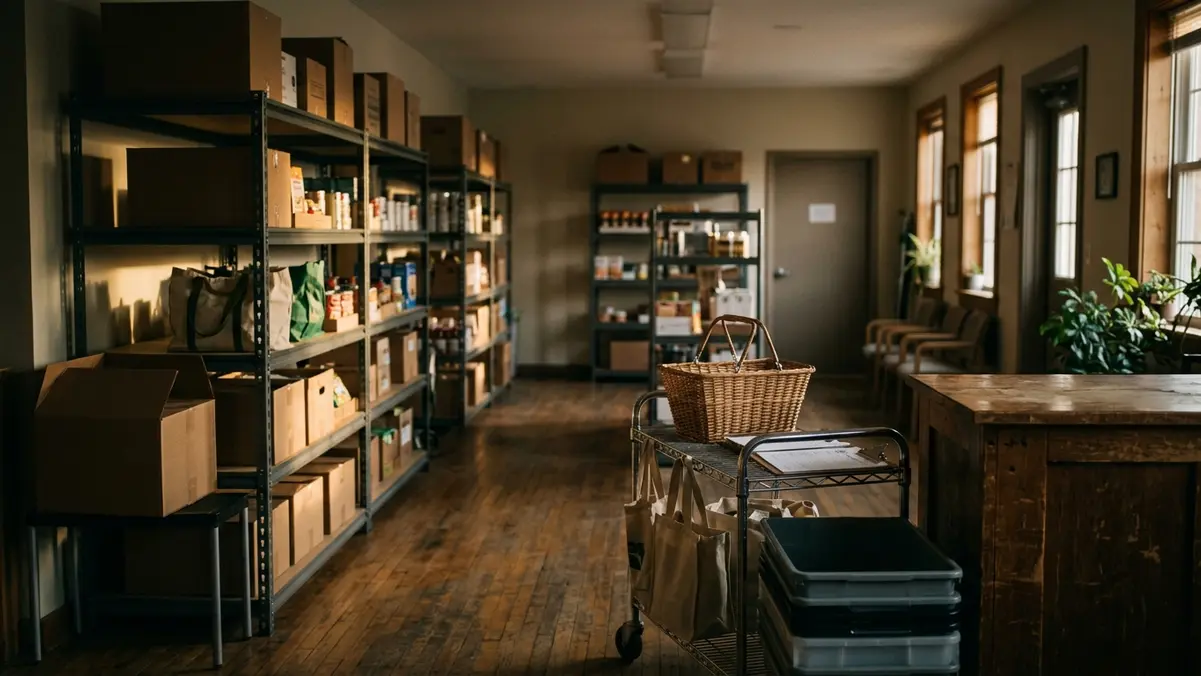
Food pantries already solve a difficult access problem: they create a recurring point of contact with families who may be balancing food insecurity, work, transportation, childcare, and several disconnected service systems. That contact can support a narrowly defined pediatric preventive care activity when the pantry protects food access, privacy, and family choice.
This case study examines the operating decisions behind that arrangement. It follows the family journey from check-in through food pickup, then looks closely at referral ownership and measurement. The navigation appears first because pantry coordinators often need to move directly to the workflow or replication plan while preparing a shift briefing.
What Co-Located Preventive Care Means for Families
Co-located preventive care places a limited health-screening service at the same site and during the same service window where families obtain food assistance. Its scope stays narrow: screening personnel identify a possible need, explain the result in plain language, and connect the caregiver with an appropriate next step. The pantry station does not become a substitute for ongoing pediatric care.
For a caregiver, the practical value lies in the calendar. One community visit can address food access and a preventive care task that might otherwise require another location, another bus trip, or another request for time away from work. The screening invitation arrives within a familiar distribution process rather than through a separate event that the family must remember and reach later.
AGFHA’s work with two neighborhood food-bank sites took place during [OPERATING PERIOD: confirm exact first and last session dates with program lead]. The participating locations must also be named from the approved project record before publication. Keeping those details open prevents a planning period, pilot session, and later operating window from being presented as one continuous program.
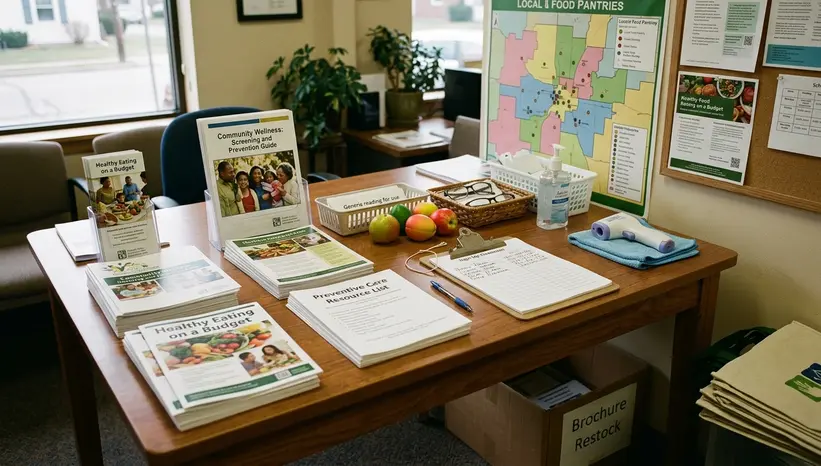
The physical proximity matters, but co-location depends on more than sharing a room. Families need a clear choice, a private place to talk, accessible consent materials, and a route back into food distribution. Without those elements, a screening table can add friction to an already demanding visit.
Why the Neighborhood Food Pantry Became the Access Point
The early planning whiteboard included a standalone weekend screening event in a community room. Flyers would have gone home through the pantry. The pantry lead identified the central weakness quickly: the plan asked families to make a second trip, arrange transportation again, and fit another appointment around work and childcare.
The food pantry already had recurring contact with families. Both participating sites used a choice-model distribution during a fixed weekday afternoon window lasting roughly two and three-quarter hours. Household eligibility renewed on a 14-day cycle, so many families returned to the same check-in desk twice each month.
That existing rhythm made the pantry a practical access point. It did not erase the pressures families faced, including fragmented referrals and competing appointments. Organizers gained a place to offer wellness education and a limited screening without creating another destination.
Selection Followed the Existing Workflow
The documented rationale centered on recurring family contact and an established distribution process. The check-in desk provided a natural place for a brief invitation before shopping began. Placing the invitation at the exit had a predictable problem: a caregiver leaving with a loaded cart and a child was unlikely to turn around for another station.
Operations also set firm boundaries. Pantry volunteers rotated in 90-minute blocks, which limited continuity across the full window. Screening staff therefore remained separate from the general volunteer rotation. Planning materials listed four other requirements: written consent or caregiver permission, language access using the languages already present on pantry signage, lockable storage for paper forms, and an agreed escalation route for concerns outside the screening scope.
Language coverage required particular attention. A bilingual volunteer present near the start of distribution might have completed a rotation before the final families arrived. Scheduling language access against the actual shift plan kept that resource available across the service window.
How Food Distribution and Pediatric Screening Were Connected
The family path was built backward from one operating rule: stopping at the screening station could never determine whether a household received food. That rule shaped the invitation, staffing plan, waiting limit, and room layout.
- Arrival: The family entered through the pantry’s normal intake route.
- Food-assistance check-in: Pantry personnel completed the usual check-in without adding screening as an eligibility condition.
- Invitation: A designated person briefly described the optional screening before the family began shopping.
- Permission: Screening staff obtained written consent or caregiver permission using prepared, accessible materials.
- Private screening: Qualified personnel completed the limited screening in a partitioned area.
- Results: The caregiver received a plain-language explanation, including the boundary of what the screening could determine.
- Handoff: Staff documented a referral or follow-up step when appropriate, then directed the family back to food pickup.
A screening contact was budgeted at around 8 to 11 minutes per child, including the results conversation. Once two or three families were waiting, the greeter paused new invitations. This small queue protected privacy and prevented the station from promising a service it could not complete within the distribution window.
A Room Layout Families Could Read
The screening station occupied a curtained or partitioned corner of about 7 by 8 feet. The caregiver sat facing away from the aisle. Staff marked a direct return path to food pickup so families did not have to search for the next step or repeat check-in.
Completed paper forms went directly into a lockbox. At the end of the window, the designated privacy owner emptied and reconciled its contents. Forms did not remain on a shared table or travel through the pantry volunteer chain.
The session kept four functions visible throughout: one person welcomed families and offered the screening, qualified personnel conducted it and explained results, one person managed privacy and forms, and one person documented referrals. When a caregiver raised a question outside the program’s scope, staff named that boundary and directed the question to an appropriate resource rather than improvising an answer.
Field Tip: Build the Pediatric Referral Handoff Before Launch
Assign Every Handoff
Define the next action for every possible screening disposition before the first pantry session. Write down who speaks with the caregiver, where the record goes, who follows up, and what counts as closure.
A phone number on a handout does not complete a referral. In the first tabletop rehearsal, the routine-result scenario ended with staff giving a caregiver a number, while nobody owned the next contact. Assigning that responsibility by name added the missing closure step.
The rehearsal took place at the pantry some 5 to 9 days before launch and lasted 45 to 60 minutes. Staff walked through one routine scenario and one concern requiring escalation. Holding the exercise on site exposed practical issues that a conference-room discussion would have missed, including sight lines, form storage, and the route back to food pickup.
Referral Handoff Checklist — Complete Before the First Pantry Session
| Handoff element | What “done” looks like | Owner | When |
|---|---|---|---|
| Consent or caregiver permission | Permission is signed or documented before screening begins. | Assigned screening team member | Before screening |
| Caregiver explanation | The result, scope boundary, and next step are stated in plain language. | Qualified screening personnel | Immediately after screening |
| Receiving resource | The appropriate service or resource type is identified for the disposition. | Referral owner | Before the family leaves the station |
| Follow-up responsibility | One named person owns the next contact rather than assigning it to the team generally. | Referral owner | At referral creation |
| Secure documentation | The completed form enters the lockbox and is reconciled after the window. | Privacy owner | Throughout the session |
| Referral closure | The outcome is recorded as reached, not reached, or family declined. | Referral owner | Within the defined follow-up window |
One page at the station listed four dispositions: routine follow-up, time-sensitive follow-up, a question outside program scope, and an urgent concern. Each entry included an owner, the words used with the caregiver, and the destination for the record.
For referrals requiring phone follow-up, staff made two attempts at different times of day within a two-week window. Every record received an outcome. A blank field could no longer hide an unfinished handoff.
What Changed—and What the Partnership Could Actually Measure
The measurement plan stayed deliberately short. Five counts appeared on one tally sheet, and staff reconciled that sheet against the lockbox contents within 72 hours of each distribution window.
Exact outcome figures cannot be responsibly inserted until the approved records confirm the first and last session dates, the two site names, and the definitions used during each operating period. Pilot sessions should remain separate from later operations unless their tally sheets used identical definitions.
| Measure | Required reporting format |
|---|---|
| Families offered screening | Verified count with its documented denominator |
| Families accepting | Verified count and, if a rate is used, accepted families divided by families offered |
| Screenings completed | Verified count and completed screenings divided by accepted invitations |
| Referrals made | Verified count and referrals divided by completed screenings |
| Documented follow-up contact | Verified count and documented contacts divided by referrals made |
The workflow review asked operational questions alongside those counts. Did screening fit within food distribution? At what point did families leave the process? Which room or staffing conditions caused delays? Did pausing invitations when the waiting area filled protect the food line?
Qualitative findings came from two bounded sources: signed caregiver feedback cards and staff debrief notes written within 48 hours of a session. Those comments can explain a delay or show how a caregiver experienced the handoff. They should remain quotations or careful paraphrases rather than being converted into rates.
These process measures describe two choice-model sites with an existing check-in desk and enough interior room for a partitioned station. Self-selection shaped who accepted screening, changed phone numbers could interrupt follow-up, the observation period was short, and there was no comparison group. A drive-through pantry lacks the check-in conversation and private interior space used here; a small site operating in one concentrated 90-minute push may also be unable to assign a separate privacy owner without slowing food distribution.
A Copyable Plan for One Pantry-Based Screening Session
Protect the Food Line
Co-location works operationally when food access remains unconditional, screening has a narrow scope, privacy is built into the room, and every concerning result has an assigned handoff.
The following prospective example gives organizers a session they can copy step by step. It describes a planning template, not another completed AGFHA project.
-
Set Authority and Scope
Schedule a 60- to 75-minute meeting with the pantry lead, screening lead, privacy owner, and referral owner. Define the screening scope, four referral dispositions, required permission, and language access. End with a written statement naming who may stop the screening station mid-window and the conditions that justify the decision.
-
Map the Live Family Path
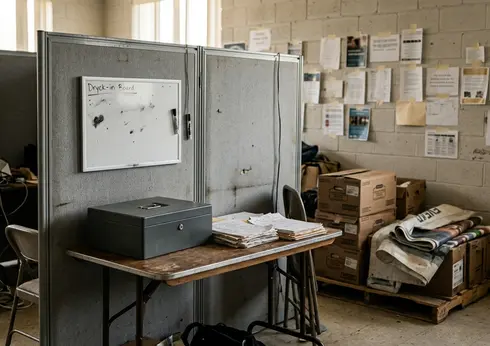
Visit during an actual distribution window. Walk from arrival to check-in, invitation, screening, results, handoff, and food pickup. Mark a partitioned area of about 7 by 8 feet, position the caregiver away from the aisle, select the lockbox location, and set the station to stop accepting new families roughly 20 minutes before distribution closes.
-
Write the Handoff Page
Create one page covering routine follow-up, time-sensitive follow-up, questions outside scope, and urgent concerns. For each, record the owner, caregiver wording, receiving resource type, documentation route, and closure action. Prepare consent and intake materials in the languages already used on pantry signage.
-
Brief Before Doors Open
Run a 12- to 15-minute briefing immediately before the session. Rehearse one family journey from the check-in invitation through referral documentation. Confirm that the invitation remains optional and separate from food eligibility. Review when the greeter pauses invitations: once two or three families are waiting, or when screening must stop to finish before closing.
-
Operate the Session
Invite families at check-in, complete permission before screening, allow roughly 8 to 10 minutes per child, and explain results in plain language. Place each completed form directly in the lockbox. Send every family back along the marked route to food pickup, whether they accept, decline, or stop the screening.
-
Close and Adjust
Reconcile the tally sheet and locked forms within 72 hours. Make two referral-contact attempts at different times of day within the defined window of roughly two weeks, recording reached, not reached, or family declined. Within 48 hours of the session, bring both partners together for a debrief and choose only one or two changes for the next session.
For the next fixed weekday window, the team can copy the sequence exactly: four owners meet, map the live route, post the four dispositions, rehearse one family journey, open the optional station beside check-in, pause invitations when the queue reaches three families, close intake 20 minutes before pantry closing, reconcile the lockbox, and meet within 48 hours to choose the next two adjustments.








Add a Comment