

Table of Contents
- Discover and verify local programs
- Check eligibility, cost, and accessibility
- Prepare for the visit
- Make service-day decisions
- Complete referrals and follow-up
- Create a neighborhood health action plan
In This Guide
Finding a neighborhood health program is often easier than determining whether it can meet your family’s actual need. A flyer may promise screenings, vaccinations, or family health resources without explaining who qualifies, what costs apply, or what happens after the event.
This guide follows the practical path from discovery to completed care. You will learn how to identify credible programs, confirm the details for a specific visit date, prepare records for each family member, use limited appointment time well, and document the next step.
The goal is not to collect a long list of possibilities. It is to choose one verified program for one priority need and move that plan forward.
How Health Support Moved Closer to Home
Neighborhood health outreach developed around a straightforward idea: preventive care works better when families can reach it. Local clinics, temporary health events, and wellness education programs brought support closer to homes, schools, workplaces, libraries, faith communities, and other familiar gathering places.
Note: Urgent symptoms or an immediate threat to health should not wait for a routine clinic appointment, wellness fair, education session, or other scheduled outreach event. This guide supports planning for community-based services; it does not replace individualized medical advice or emergency care.That history produced the mix of options families encounter today. A neighborhood program may be a permanent clinic, mobile service, one-day wellness fair, recurring education series, screening event, support group, or referral and navigation resource. These models may appear together on the same community calendar, but they do not offer the same level of clinical care.
A standing clinic may evaluate symptoms, manage medications, or schedule preventive visits. A screening table at a weekend fair may only identify a result that needs further evaluation. Both can support family health, yet treating them as interchangeable creates confusion.
The useful workflow is simple: map available programs, verify the details, prepare a family packet, use the visit deliberately, and record the next action.
Match the Program Model to the Need
Start with the service your family needs, not the event name. “Community wellness day” may describe anything from health education tables to vaccinations and preliminary screenings.
Common neighborhood health program models and their practical uses| Program model | Useful for | Confirm before attending |
|---|---|---|
| Ongoing community clinic | Preventive visits, evaluation, continuing care, or referrals | New-patient availability and appointment scope |
| Mobile clinic | Services delivered at rotating neighborhood locations | Current location, schedule, and services available that day |
| One-day wellness fair | Education, selected screenings, and connections to resources | Whether services include evaluation or only preliminary results |
| Recurring education program | Wellness education and support for ongoing health goals | Session schedule, registration, and intended audience |
| Single-purpose screening event | Checking one defined health measure | How results are delivered and where follow-up occurs |
| Support group | Shared education and community support | Facilitation, meeting format, and participation requirements |
| Referral or navigation service | Locating care and working through access barriers | Whether the service schedules appointments or only provides contacts |
Program labels cannot guarantee clinical capability. Ask what staff will actually do during the intended visit and what they expect the family to arrange elsewhere.
Build a Two-Pass Map of Local Health Programs
The first pass is discovery. Search clinic directories, municipal or county announcements, school and library notices, community-center calendars, faith-community bulletins, and materials from organizers already known in the area.
Sort each result by service model as you find it. This prevents a mobile clinic with scheduled appointments from being compared directly with a walk-through education fair.
Pass One: Create a Short Discovery List
Pack the Core Information
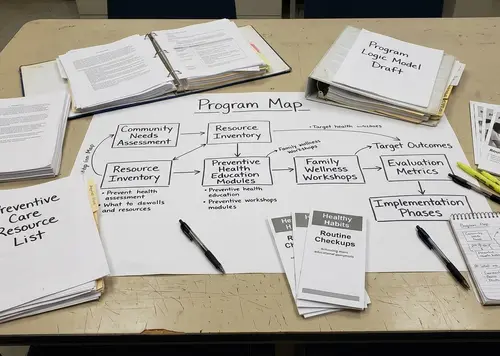
Record the program name, service type, family member who needs it, relevant deadline, required documents, transportation plan, questions, and follow-up contact. Keep one primary option and one backup for each priority need. An open-ended list usually adds searching without producing a decision.
Pass Two: Stop Searching and Verify
Verification is a separate task. Confirm the organizer’s identity, current date, location, contact method, registration process, age range, cost, and exact services offered.
An undated flyer is not confirmation. Neither is a reposted social media notice or an old calendar entry. Keep those items on the discovery list until a current program contact verifies them for the date you intend to attend.
Summary: Discovery answers, “What might be available?” Verification answers, “Can this program provide the needed service for this family member on this date?”Check Eligibility, Cost, and Accessibility Before Enrolling
Use the same question order each time so an important condition does not disappear in a long conversation.
- Does the program serve residents from my address or area?
- Does it serve this family member’s age group?
- Is there income screening?
- Does insurance status affect eligibility or cost?
- Is a referral required?
- Are appointments available for the intended date?
- Is the program accepting new participants?
Tie every answer to the service you need. Admission to a wellness fair does not establish eligibility for every vaccine, screening, or follow-up appointment offered inside it. Conditions may also change with staffing, capacity, or available funding.
A family might confirm midweek that a program accepts new participants, only to find that capacity has been reached by the weekend. Ask the program to confirm availability for the intended date rather than relying on a general answer from an earlier conversation.
Separate Free Entry From Free Care
Ask about each possible charge directly: the visit, laboratory work, vaccines, equipment, prescriptions, referrals, and later appointments. “The event is free” may refer only to admission.
Accessibility deserves the same precision. Confirm step-free entry, seating, restroom access, interpretation, communication support, and any accommodation your family member needs. Request the eligibility and cost information in writing when the program can provide it.
Prepare a Family Health Visit Packet
Busy outreach settings reward clear records. Prepare one summary sheet for each family member rather than combining several health histories on a household page. Staff process people individually, and separate sheets reduce the risk of mixing medication or allergy details.
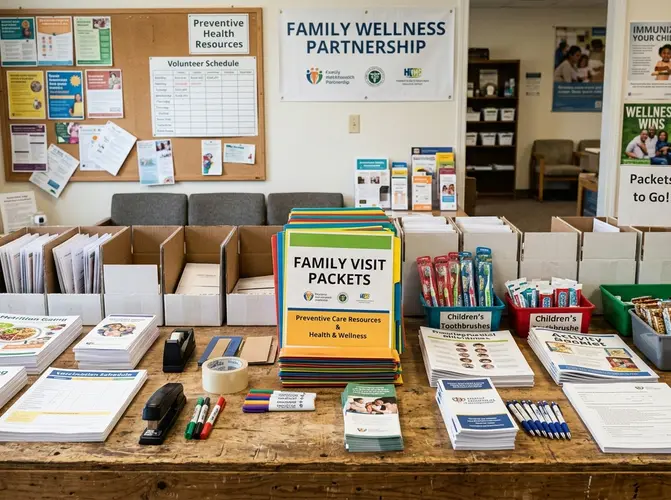
- Appointment or registration confirmation
- Accepted identification
- Insurance information, if requested
- Current medications and supplements
- Known allergies
- Relevant health history
- Current clinician contact details
- A ranked list of questions
Carry copies instead of original documents unless the program specifically requires an original. Papers can be misplaced at a crowded event, and some records are difficult to replace quickly.
Rank Questions Before You Arrive
Place an immediate concern first. Follow it with the most important preventive need, medication issue, screening question, and requested referral. The ranking matters because a brief visit may not cover every item.
Quick Tip: Write the top question in one sentence. A clear opening such as “I need to know whether this medication concern can be addressed today” helps staff define the visit before time runs short.Use Clinics and Wellness Fairs Without Losing the Next Step
At arrival, confirm registration and ask which stations or services apply to each family member. Check the expected wait and whether leaving a line will affect your place in the queue.
At a clinic, state the top concern first and hand over the prepared summary. Ask what the visit can realistically cover. If another appointment is needed, identify who schedules it before leaving.
At a wellness fair, distinguish among education, preliminary screening, diagnosis, and treatment. A screening result may indicate that evaluation is needed; it does not provide a diagnosis by itself.
One family may arrive expecting a free finger-stick screening to include diagnosis and treatment. If the result instead calls for clinical evaluation, leaving without a referral destination or appointment means the important work remains unfinished.
Use a Checkpoint After Every Service
- What does this result or instruction mean?
- What should happen next, and by when?
- Who is responsible for arranging that step?
For each contact, record the person’s name or role, the date, instructions, referral destination, expected response window, and any warning signs discussed. This short record is more useful than a bag of handouts with no assigned next action.
Practical Tip: Make One Confirmation Call Count
Open with the exact service needed. Asking only, “Do you serve families?” often produces a broad answer that says little about waitlists, age restrictions, or appointment scope.
“I’m calling to confirm whether you provide [specific service] for a person age [age] on [date]. Could you confirm the location, eligibility rules, total expected cost, documents, accessibility, registration process, and how follow-up is handled?”
Write down when the information was confirmed. Schedules and capacity can change between the call and the visit.
If the First Answer Does Not Resolve the Need
- If the program is full: Ask for the next opening, cancellation process, and one appropriate alternative.
- If the family member is ineligible: Ask which condition is not met and whether a navigation service can suggest another program.
- If interpretation is unavailable: Ask whether another date, location, or communication arrangement is offered.
- If a referral is required: Ask who may issue it, where it must be sent, and whether receipt must be confirmed before registration.
Before departure, check that confirmation has been received, eligibility reviewed, costs clarified, documents packed, the route planned, and the follow-up method understood.
Complete the Referral and Follow-Up Loop
Attendance is not the endpoint when a screening, referral, prescription question, repeat test, or preventive appointment remains unresolved.
Create a simple household follow-up log. It should show what happened, who owns the next action, and whether that action was completed.
Family health follow-up log| Service date | Result or instruction | Responsible person | Deadline | Contact attempt | Scheduled appointment | Status |
|---|---|---|---|---|---|---|
| Record date | Write the exact next step | Name the family member, program, or clinic | Record the stated timeframe | Log dated calls or messages | Add confirmed details | Open or complete |
Ask whether records will be sent automatically. In some cases, the family must request, collect, or deliver them. Verbal instructions should be written into the log before details fade.
Disconnected numbers, unavailable appointments, unclear referral ownership, and unexpected fees can interrupt follow-up. When a promised response does not arrive, use the program’s stated contact process and keep factual, dated notes. Mark an item complete only after the household has confirmed the outcome.
Create Your Neighborhood Health Action Plan
Choose one priority need. Compare the primary and backup programs that have current, verifiable information. Confirm eligibility and cost, prepare the relevant records, attend with ranked questions, and document the next action.
If two needs are genuinely urgent, address the more time-sensitive one first and place the other at the top of the next planning cycle.
Summary: A useful health program is not merely nearby or well advertised. It is verified for the needed service, accessible to the family member, clear about costs, and connected to a follow-up path.Commit today to one verified program for one priority family health need, and place the confirmation call before doing any more searching.









Add a Comment