


Table of Contents
- Metabolic-health definitions
- Safety boundaries
- Four-part grocery routine
- Meal-building tip
- Family meal examples
- Closing checklist
Metabolic Health Starts With Repeatable Meals
The most useful metabolic-health strategy for many families is to stop shopping for “blood-sugar-perfect” foods and build repeatable mixed meals instead.
Parents often reach the grocery aisle carrying a mental list of foods they have been told to avoid. Sweetened yogurt is “bad.” Bread is suspicious. Fruit suddenly needs defending. Yet removing a familiar food can create a larger nutrition problem. If a child refuses breakfast after a parent takes away the only yogurt they accept, the family has lost a dependable meal over concern about one ingredient.
A steadier approach might pair that yogurt with fruit, then watch how the breakfast works in real life.
Metabolic health describes how the body uses, stores, and regulates energy over time. It is an over-time pattern, not a verdict delivered by one ingredient, one meal, or a short-lived change in energy. Cost, culture, allergies, schedules, sensory preferences, and food access all shape what a realistic meal looks like.
This guide translates blood sugar, insulin, and metabolism into practical grocery and meal decisions. The aim is adequate nourishment without attaching moral value to food. Families managing a diagnosed condition or prescribed carbohydrate targets should continue following the plan set with their clinical team.
Blood Sugar, Insulin, and Metabolism in Plain Language
Blood glucose, often called blood sugar, is an energy source circulating in the bloodstream. Some of it comes from carbohydrate-containing foods. The body can also release glucose from stored energy when it needs fuel.
Carbohydrate appears in many foods that contribute useful nutrients to family meals, including fruit, beans, milk, whole grains, and starchy vegetables. Treating the entire category as harmful makes everyday meal planning harder and can narrow a child’s diet quickly.
What Insulin Does
Insulin is a hormone that helps glucose move from the bloodstream into cells. Those cells can use the glucose for energy or store it for later. This process is part of metabolism, the collection of processes through which the body manages energy and supports growth, movement, repair, and daily function.
What Insulin Resistance Means
With insulin resistance, cells respond less effectively to insulin, so the body may need to produce more insulin to manage blood glucose. The National Institute of Diabetes and Digestive and Kidney Diseases offers a fuller explanation of insulin resistance and prediabetes.
A specific meal cannot predict a specific glucose number from its ingredient list alone. Meal composition, recent activity, sleep, stress, medication, illness, age, and individual physiology can all influence glucose patterns. That context matters when online posts assign a universal metabolic effect to a single food.
Know When General Meal Guidance Is Not Enough
Pause Before Restricting
This grocery framework is educational. It cannot diagnose insulin resistance, serve as an individualized treatment plan, or guarantee prevention of a medical condition.
Do not place a child on a restrictive low-carbohydrate diet solely because of online metabolic-health claims. Children need adequate energy and nutrients for growth, and abrupt restriction can disrupt family meals or heighten anxiety around food.
Individual guidance is important when a child has diabetes, prediabetes, growth concerns, food allergies, gastrointestinal conditions, eating-disorder risk, or nutrition needs related to medication. An appropriate clinician or registered dietitian can account for medical history, growth, symptoms, treatment goals, and the foods a household can realistically provide.
Seek prompt evaluation for unusual thirst, frequent urination, unexplained weight change, persistent fatigue, or other significant health changes. A grocery checklist cannot determine the cause of those symptoms.
This boundary belongs before the shopping routine for a reason: general wellness education should never override an established care plan.
Use a Four-Part Grocery Routine
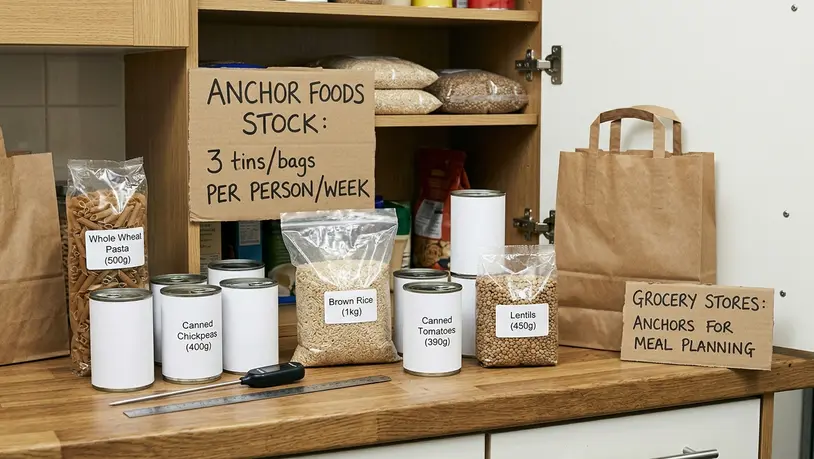
Long nutrient checklists tend to disappear from memory once a child is tired, the store is crowded, and dinner needs to happen soon. Four flexible anchors are easier to carry through the aisle:
- a fiber-containing carbohydrate;
- a practical protein source;
- produce;
- an unsaturated fat or another satisfying accompaniment.
1. Choose a Familiar Carbohydrate
Start with something the household already eats. Options include oats, brown rice, whole-grain bread, corn tortillas, beans, lentils, potatoes with skin, fruit, and frozen vegetables. Some foods fit more than one anchor. Beans, for example, provide carbohydrate, fiber, and protein.
Familiarity has practical value. A nutritious food offers little help when it repeatedly comes home untouched.
2. Add a Workable Protein
Eggs, yogurt, milk, tofu, beans, lentils, fish, poultry, and nut or seed butter can all work. Choose according to culture, budget, allergies, storage space, and the amount of preparation time available.
“Practical” may mean canned beans on Tuesday and roasted chicken on Sunday. Both can support the same meal pattern.
3. Include Produce Where Feasible
Fresh produce is one option among several. Frozen vegetables, canned fruit, and other packaged formats can make produce more dependable when access, price, storage, or time is limited. Telling a household with unreliable fresh-food access that frozen food is inferior excludes useful family health resources from the start.
Families managing specific sodium levels, ingredients, or additives should still read the label. The package format alone does not answer those questions.
4. Choose Flavor, Fat, or Another Satisfying Addition
Olive oil, avocado, seeds, nut or seed butter, cheese, hummus, dressing, and familiar dips can make a meal enjoyable and more complete. Acceptability counts. A meal has to be eaten often enough to become a routine.
Keep Anchors Flexible
The four anchors guide shopping; they do not turn every plate or snack into a test. Crackers and cheese on a rushed afternoon can still be a useful snack even when produce is unavailable.
Compare Packages With a Purpose
When two similar products fit the same job, compare them in a consistent order:
- Compare similar products rather than unrelated foods.
- Consider how much is usually served and what accompanies it.
- Scan the ingredient list for household priorities or allergens.
- Review fiber, added sugar, sodium, and protein according to the food’s purpose in the meal.
Under time pressure, secure one dependable item for each anchor before looking at specialty products marketed for metabolic health.
Practical Tip: Add Before You Subtract
Add First
Use “add before you subtract” as the operating rule. Strengthen a familiar meal with another useful component before removing a food your family already accepts.
Abrupt removal often creates resistance at the table. It can also turn ordinary foods into a source of worry. Adding gives a family room to improve variety while preserving the routines that already help everyone eat.
- Serve eggs or yogurt beside toast.
- Stir beans and vegetables into rice.
- Add nut or seed butter to oatmeal.
- Pair crackers with cheese and fruit.
Mixed meals often provide a broader range of nutrients and may feel more satisfying than eating a refined carbohydrate alone. They still do not promise a particular glucose response.
Allergy-aware substitutions can preserve the pattern. Seed butter can replace nut butter. Beans, tofu, eggs, dairy, or a suitable alternative can fill the protein role according to the family’s needs.
Consider the child who eats one brand of sweetened yogurt every morning. Removing it may erase breakfast. Keeping it and adding sliced fruit protects the familiar routine while introducing another food. That small move creates a foundation for later changes without making breakfast a conflict.
How the Framework Works in Real Family Meals
A seven-day meal plan can collapse as soon as practice runs late or the last banana gets eaten. Short scenarios teach a pattern that families can rebuild with what is available.

Breakfast
Prepare oatmeal with milk or a suitable alternative, then add fruit and seeds. The oats and fruit contribute carbohydrate and fiber. Milk or an alternative can add protein depending on the product, while seeds bring texture and satisfying fat.
Packed Lunch
Use a sandwich or wrap with a protein filling, such as egg, tuna, tofu, chicken, beans, cheese, or seed butter. Add crunchy vegetables or fruit and a familiar dip or spread. The meal can shift with leftovers and preferences while retaining the same basic structure.
Snack
Try crackers with cheese and fruit, or toast with seed butter. On a rushed day, two components may be enough. Turning all four anchors into a snack mandate makes ordinary eating feel like failure and undermines the repeatability this framework is meant to support.
Dinner
Build around rice and beans, add frozen vegetables, and finish with avocado, cheese, salsa, or another familiar accompaniment. A household might use corn tortillas instead of rice the next night without changing the underlying approach.
Picky-Eating Meal
Pair at least one accepted food with a small exposure to a second component. A child who reliably eats plain pasta might receive pasta alongside a small serving of peas and a familiar protein. Keep pressure out of the exposure. The second food can sit on the plate without a requirement to taste or finish it.
Budget Meal
Beans, eggs, oats, frozen produce, canned fish, and store-brand staples can cover the anchors without specialty foods. Canned and frozen choices also reduce the pressure to use every ingredient before it spoils.
These scenarios illustrate a flexible pattern rather than portion-controlled plans. Families following prescribed carbohydrate targets should adapt foods and quantities with their clinician.
Sources
- National Institute of Diabetes and Digestive and Kidney Diseases. “Insulin Resistance & Prediabetes.” Read the health information resource.
The Grocery-Cart Check
Before leaving an aisle, run the next meal through four quick decisions:
- Identify one familiar carbohydrate the family already eats, such as oats, rice, tortillas, bread, potatoes, or fruit.
- Add a workable protein that fits the household’s budget and allergies, such as eggs, yogurt, beans, tofu, fish, poultry, or seed butter.
- Include produce where feasible, using fresh, frozen, canned, or another accessible format.
- Choose flavor or fat that makes the meal acceptable and satisfying.
Consistency, flexibility, and adequate nourishment carry more value in daily family health than chasing a perfect glucose response. One strengthened meal can become a routine, and a reliable routine gives the family somewhere practical to begin.
At your next grocery trip, which one familiar family meal will you strengthen first?









Add a Comment