


Table of Contents
- The elementary nutrition challenge
- Child-ready curriculum design
- Reaching busy parents
- Moving lessons into schools
- What the evidence cannot show
- Authorship and review
- Adapting the model
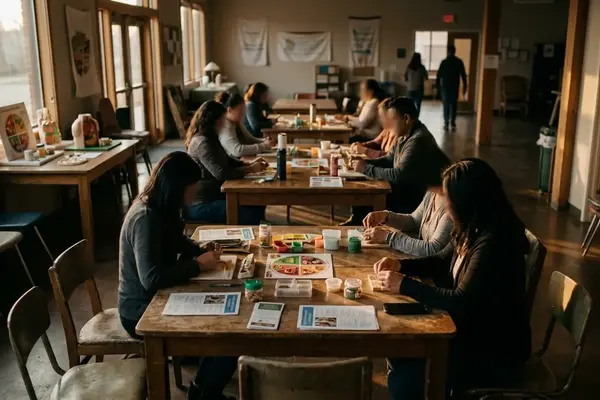
One university nursing student association undertook an initiative to teach holistic wellness to families in underserved school districts. That fact raises the question at the center of this case: how could student nurses turn broad wellness concepts into useful elementary nutrition lessons while also reaching parents with limited time?
The available source offers a starting point rather than a complete program record. It identifies a local university, its nursing student association, elementary pupils, parents, and underserved school districts. The source does not name the institution or districts, establish when the initiative operated, count participating schools or families, identify funding, or document faculty and district approval.
One Association, One Elementary Nutrition Challenge
The instructional ambition was broad. Holistic wellness can include food choices, movement, sleep, stress, relationships, and preventive care. An elementary classroom period offers a much tighter delivery envelope.
Why the lessons needed a narrower shape
Useful wellness education must survive the trip from an idea to a child's daily routine. Nutrition provides a practical entry point because children encounter meals and snacks every day, yet young pupils still depend on caregivers for grocery purchases, preparation, transportation, and household schedules.
That dependency changes the design problem. A lesson can help a child identify or practice one action during class. Continued use at home requires a family pathway that respects cost, culture, language, available food, and the time between dismissal and the evening meal.
Project records or authorized interviews should confirm the actual constraints faced by the association. Those records should address child comprehension and instructional time, along with household differences, school schedules, and how much the student volunteers could realistically take on. A typical classroom slot may leave only 20 to 30 minutes after settling and transition time, but that range should remain a planning assumption until the school's schedule is verified.
The association's academic calendar matters as well. Clinical rotations, examinations, and semester breaks can interrupt volunteer availability. Any description of weekly delivery across a term of roughly fifteen to eighteen weeks therefore needs a roster and session log behind it.
Keep Scope Clear
Student nurses may provide general wellness education, such as helping a class recognize the parts of a balanced lunch. A caregiver question about a specific child's symptoms, diagnosis, food restriction, or prescribed diet requires an appropriate referral rather than an improvised lesson response.
How the Association Could Build a Child-Ready Curriculum
A workable lesson sequence moves through four decisions: define a small set of age-appropriate objectives, connect each objective to a familiar meal or routine, choose an active learning method, and create one manageable family action.
- Name an observable objective. Ask what the child will do by the end of the session. Two objectives, or at most three, usually fit a 20- to 30-minute planning envelope more comfortably than a long list of knowledge goals.
- Anchor the idea to daily life. A familiar breakfast, packed lunch, snack, or evening meal gives the child a concrete setting in which to use the concept.
- Let the child perform the skill. Active practice makes comprehension visible to the facilitators. It also reveals confusing language while the lesson can still be adjusted.
- Give the household one next action. The activity should fit into a meal the family already expects to prepare, without requiring a login, printing, or another trip to school.
Concrete food examples and repeatable actions are easier to carry home than dense terminology. Cultural flexibility matters here. A lesson should leave room for the foods families already eat instead of treating one menu as the standard for family health.
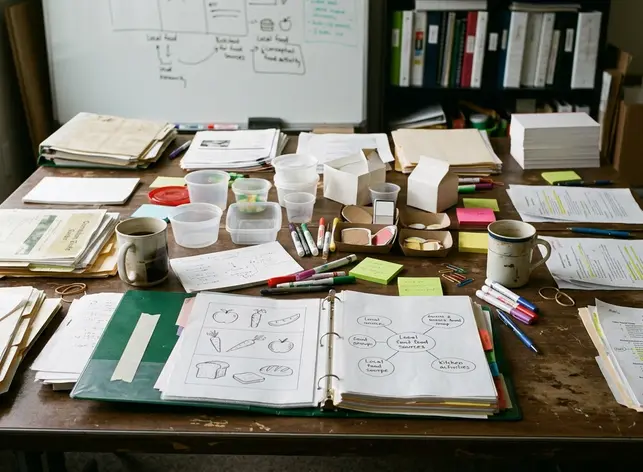
The source supports only a general description of elementary nutrition education within a broader holistic wellness initiative. It does not verify named modules, recipes, games, or clinical recommendations. Before publication, one real lesson example should be recovered from association materials, including its objective, classroom activity, family prompt, and intended behavior. Pupil names, photographs, and classroom identifiers should be removed.
A curriculum audit before delivery
- Set written material at the grade band below the class whenever possible.
- Check whether food examples allow for cultural and household variation.
- Identify hidden assumptions about price, kitchen equipment, and grocery access.
- Clear allergy and food-handling questions against district policy.
- Estimate the caregiver minutes required.
- Separate general wellness education from individualized dietary advice.
These checks reduce preventable friction. They do not establish that the original association completed each step; project documents would need to confirm that history.
The Parent-Engagement Problem Beyond the Classroom
The take-home prompt that disappears into a second-grader's folder between Friday dismissal and Monday's laundry reveals a delivery problem. The content may be sound while the return route remains fragile.
Busy caregivers may be commuting, changing shifts, helping siblings, completing homework routines, or preparing dinner during the late-afternoon and early-evening window. A family task has to enter that household rhythm with very little administrative weight.
Lower the cost of participation
The association could evaluate a prompt readable in under two minutes and completable during a meal already being prepared. A return route should use a channel the family already knows: the child's folder, a verbal response to the teacher, or the school's existing message system. These are design options until case records identify what the initiative actually used.
Timing deserves equal attention. Sending a task on Monday or Tuesday and accepting it through the following week gives families more room than a next-day deadline. Reading level and language access should be reviewed before distribution, together with food cost and whether a device is needed at all.
Stress-Test the Prompt
Give the draft to a reviewer who did not help write it. Ask that person to list every assumption about time, materials, literacy, language, internet access, and cost. Remove each avoidable assumption or provide a practical substitute that works with a pantry and a pen.
Non-response needs context. A low return count may say more about the channel, the timing, or the reading demands than about how much a family cares. So when only a handful of prompts come back, which question comes first in the association's debrief: what the parents failed to do, or how the request reached them?
Moving a Student-Led Nutrition Plan Into Schools
School delivery depends on a chain of connected actions:
- Association planning
- School coordination
- Lesson and material preparation
- Classroom delivery
- Family communication
- Post-session reflection
A strong lesson can lose its value when it conflicts with classroom routines, available space, visitor requirements, or volunteer capacity. Coordination determines whether the program reaches the room in a usable form.
Primary case materials should identify the permission or building-access process, scheduling owners on both sides, the educator contact for each classroom, material preparation and transport responsibilities, volunteer orientation, and safeguarding or background-check requirements. Common planning ranges, such as roughly two to six weeks for outside-presenter approval or about two to four weeks for volunteer clearance, should be treated as items to verify locally rather than facts about this initiative.
Record decisions as they happen
A concise decision log can preserve the implementation story. Each row should name an obstacle, the response selected, the reason for that response, and the source record confirming the choice. An empty source field marks editorial reconstruction and prevents a plausible account from hardening into unsupported history.
Preparation records may also capture when materials were assembled, how long orientation lasted, and whether volunteers arrived early enough for sign-in and room setup. Those details help another association understand the workload behind a classroom visit.
What Changed and What the Evidence Cannot Yet Show
Results should be separated into three tiers. Outputs describe what the association delivered. Engagement indicators describe how schools and families responded. Outcomes concern changes in eating patterns, routines, or health.
The supplied source contains no numerical outcome data. It cannot support claims about improved nutrition behavior, caregiver participation, or health status.
Before publishing figures, the association should tie each count to a defined period, such as one fall term from the start of the school year through winter break. Records could then verify schools served, sessions delivered, pupils present, family prompts distributed, caregiver responses by return route, activities reported complete, and repeat invitations from the same building.
Qualitative changes can still be meaningful when documented. Examples include a curriculum revision between sessions, a rewritten family prompt, an adjustment after a scheduling conflict, or specific educator feedback that shaped the next lesson. Each reported outcome should state the operating dates, participating schools, collection method, and time elapsed after delivery.
The Transferable Result
The strongest lesson currently available is the decision process: narrow holistic wellness to child-performable objectives, reduce the caregiver's participation cost, and fit delivery to school conditions. Claims of changed nutrition behavior or health require follow-up evidence.
Adapting the Model for Another Student Association
Replication begins with a bounded promise. A student association needs one family-relevant objective, verified content oversight, elementary-comprehension design, a low-burden caregiver action, school coordination, a limited pilot, and recorded results.
| Implementation move | Why this move comes here | Evidence needed |
|---|---|---|
| Define one family-relevant objective | It sets the boundary for lesson content and measurement. | A written, observable child action |
| Secure content oversight | Review before delivery prevents scope and safety errors. | Reviewer name, scope, date, and documented approval |
| Design for elementary comprehension | Children need language and practice suited to their grade band. | Reading-level check and observation plan |
| Reduce caregiver burden | Family participation depends on time, access, and a workable return route. | Assumption audit and channel test |
| Coordinate with the school | Visitor policy, scheduling, space, and safeguarding shape delivery. | Named contact, permissions, schedule, and volunteer requirements |
| Run a bounded pilot | A limited test makes revisions visible and records manageable. | Session logs and versions of the lesson materials |
| Record results | Outputs, engagement, and outcomes need separate treatment. | Dated counts, collection methods, feedback, and follow-up interval |
A manageable pilot could cover two to four classrooms in one or two buildings during a single term, with the same lesson delivered more than once so that revisions appear in the record. That scale comes from the replication framework, not from evidence about the original initiative.
Local conditions will reshape the sequence. Associations should examine district visitor policies, allergy and food-handling rules, home languages, nearby grocery access, student rotation and examination calendars, and the availability of a licensed content reviewer. The sequence also assumes a named contact inside a school; a central-office curriculum review may require the calendar to be rebuilt around its submission cycle.
Which single constraint—content review, school coordination, or parent access—must your association resolve before it promises a launch date?





Add a Comment