


Table of Contents
- Why neighborhood conditions matter
- Transportation and missed care
- Housing, food, and connection
- A practical outreach workflow
- The 10-minute family check
- What families can act on
- A worked transportation plan
Why a Bus Route or Lease Can Change a Family’s Health
A bus that arrives after a clinic’s check-in window closes can turn a planned follow-up into weeks of waiting. An unstable lease can force a family to choose between moving costs, groceries, and collecting a prescription.
These are examples of social determinants of health: the everyday conditions surrounding where people live, learn, work, travel, and build relationships. They influence whether a family can sleep safely, store medication, prepare food, reach preventive care, and carry out a treatment plan.
Medical care remains essential. Conditions outside the clinic often determine how easily a family can use that care. A prescription offers little help when the pharmacy closes before a parent’s shift ends, just as nutrition guidance may assume access to a working refrigerator or stove.
Naming those conditions brings the real obstacle into view. Instead of treating a missed visit as a motivation problem, a family or outreach worker can ask what happened between the front door and the clinic.
Five Conditions Around the Home That Shape Health
The Healthy People 2030 social determinants of health framework groups these influences into broad domains. At the kitchen table, five categories make the connections easier to examine.
Transportation
A bus schedule places a parent at the clinic after a morning check-in closes. The immediate constraint is timing; the health consequence is delayed follow-up. A later appointment, a confirmed ride option, or a dependable backup may keep the visit on track.
Housing
Rent goes up, and money previously reserved for groceries is absorbed. That budget pressure can narrow food choices and increase stress. The useful next step may involve checking current housing assistance rules or creating a short-term plan around the most urgent health expense.
Food Access
Suppose the nearby store carries food, but the household lacks reliable transportation and cold storage. Practical access remains limited, which makes a nutrition plan difficult to follow. Support must fit the family’s kitchen equipment, storage, schedule, and dietary needs.
Education and Economic Stability
A shift change collides with pharmacy hours. Missing work threatens income, while delaying pickup interrupts medication access. Calling the pharmacy about current collection options gives the family a concrete place to start.
Social and Community Support
One caregiver has an appointment but no one to watch a younger child. Childcare becomes the constraint, and the visit may be postponed. A single trusted person who agrees to help at a specific time can change the outcome.

Transportation Access: From Distance to Missed Care
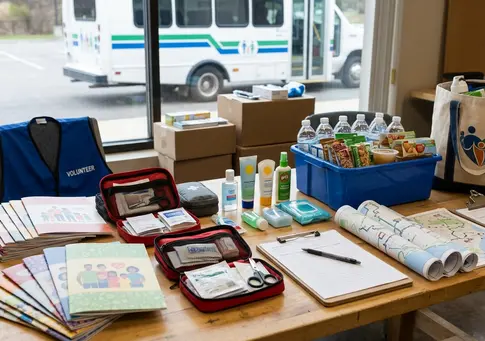
Distance tells only part of the transportation story. A useful trip review covers route availability, total travel time, fare, physical accessibility, service reliability, and fit with work or school schedules.
Consider a transfer window of about ten minutes. If the first bus arrives several minutes late, the connection may disappear. The family reaches the clinic beyond its grace window, the visit is rescheduled, and follow-up moves to another booking cycle. A small delay at the first stop has now affected care.
Map the complete trip before choosing a solution:
- Trace the outbound and return legs.
- Account for waiting and transfer time.
- Plan childcare for siblings during the full trip.
- Confirm space or equipment for a stroller, wheelchair, or other mobility need.
- Check the fare and any confirmed fare-assistance option.
- Name one backup that is available at the required time.
In communities served by demand-response transportation, the sequence may change. If rides require advance booking, reserve the ride first and select the appointment time around the confirmed pickup.
Housing Stability, Food Access, and Social Connection
Frequent moves can interrupt mail, school routines, pharmacy relationships, and continuity with a care team. Overcrowding can disturb sleep. Moisture, pests, unsafe temperatures, or uncertain rent can increase stress and make an existing health condition harder to manage.
Housing also shapes what a care plan can reasonably assume. Some medicines need controlled temperatures, while unopened insulin generally requires refrigeration. A home without dependable cooling or a working refrigerator calls for a storage plan confirmed with the pharmacy or clinical team.
Food availability and food access deserve separate questions. A store may carry suitable food while price, transportation, cooking equipment, cold or dry storage, cultural fit, or shift work keeps it out of reach.
Social connection supplies practical help as well as companionship. A relative may provide childcare during an appointment. Someone next door may offer a ride, while another trusted person helps with interpretation or reads eligibility paperwork alongside the family.
Stop the Checklist
No heat, no running water, a gas odor, exposed wiring, active sewage backup, or an urgent medical symptom requires immediate escalation. Contact emergency services, the appropriate local housing inspection or code line, or a clinician according to the hazard.
How Community Outreach Turns a Barrier Into a Next Step
AGFHA’s current outreach initiatives address non-medical barriers affecting local families. A focused conversation can prevent resource lists from becoming another burden.
- Listen without assumptions. Let the family describe what is happening in its own terms.
- State the health goal. Write one sentence, such as “Collect the prescription before Friday evening.”
- Name the blocking condition. Choose the barrier with the most immediate effect.
- Review reachable options. Confirm service boundaries, eligibility, hours, and expected response time before relying on a listing.
- Confirm consent. Ask before sharing household details or contacting a service on the family’s behalf.
- Set the follow-up. Choose a specific day and time to see whether the next step happened.
When available, a warm handoff means staying on the phone or in the room while the family makes first contact. It keeps the immediate health goal at the center of the conversation.
A 10-Minute Family Check for Non-Medical Barriers
Run the Check
- Write down one health task: attend a follow-up, collect a prescription refill, or complete a lab draw.
- Ask what could block it under transportation, housing, food, cost or schedule, and social support.
- Circle the single barrier with the most immediate effect on the task.
- Name one action and its owner: “Jordan will call the clinic about a later time.”
- Set an exact check-back time within the next few days, such as “Thursday at 6:30 p.m.”
Until a service operator has been checked out, withhold a full Social Security number, immigration status, bank details, and full date of birth.
What to Remember About Neighborhood Health
Barrier, Goal, Step
Transportation, stable housing, food access, economic conditions, and social support can determine whether a family can act on health guidance. Use one clearly defined barrier, one health goal, and one confirmed next step. Assign that step to a person and put the follow-up time on the calendar.
Sources
- Office of Disease Prevention and Health Promotion. Healthy People 2030: Social Determinants of Health.
A Worked Plan for a Two-Bus Pediatric Visit
This illustrative example can be copied and adapted. A family has a pediatric follow-up at 9:15 a.m. The trip requires two buses and a transfer window of roughly ten minutes, while the first leg has recently arrived several minutes late.
- Write the goal: “Arrive for the pediatric follow-up with enough time to check in.”
- Map both directions: Record each bus, transfer point, return route, and return waiting time.
- Call the clinic: Ask whether a later appointment is open that morning.
- Check transportation: Look at a current local directory, then call to confirm any relevant fare assistance or ride option.
- Name a backup: Ask one available person directly rather than assuming they can drive.
- Record confirmation: Write down the staff member’s name, call date, new appointment time, and any reference number.
- Review the evening before: Check service alerts and send one confirmation message to the backup.
The completed plan reads: appointment moved to 10:45 a.m.; direct bus leaves at 9:20 a.m.; departure from home is 9:05 a.m.; a neighbor has agreed to remain available until 11:30 a.m.; and the insurance card, medication list, and snack are packed the night before. Sometime that previous evening, the caregiver checks transit alerts and texts the neighbor. Every part of the plan now has a time, an owner, and a backup.









Add a Comment