


Table of Contents
When a Parent’s Appointment Collides With School Pickup
Imagine a parent’s cardiology follow-up at 2:45 p.m. and school dismissal at 3:15 p.m. A sibling can drive to the clinic, but needs the medication list. Someone still has to collect the child and pick up a prescription before the pharmacy closes. Meanwhile, the person coordinating everything has no time left to recover.
Sandwich-generation caregiving means supporting your children while also helping one or both aging parents.
A workable family health plan starts with information another person can use, local relief that fits your parent’s needs, and a clear handoff. The copyable medical records, provider comparison notes, and handoff checklist below turn those pieces into a covered afternoon.
Keep Medical Details Ready for the Next Caregiver
Keep a private medical record for each person and a separate shared schedule for family logistics. A neighbor handling school pickup needs the time and backup contact; your parent’s diagnoses belong in the private record.
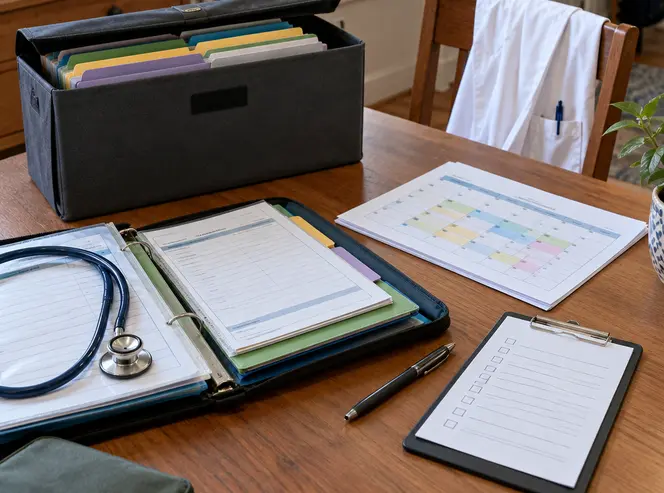
Copy these tables into a document, save them, and print the relevant pages. Choose a primary record keeper and a named substitute. With your parent’s agreement, share the information each helper needs.
A Medical Summary for Quick Reference
| Field | Details to enter |
|---|---|
| Person receiving care | Full name: |
| Preferred name | Name to use: |
| Emergency contacts | Primary and backup: relationship, phone |
| Clinicians | Name, specialty, office number: |
| Pharmacy | Name, phone, hours: |
| Allergies | Allergy and reaction: |
| Relevant conditions | Conditions relevant to care: |
| Communication preferences | Language, glasses, hearing aid needs: |
| Date last updated | Date: |
A Medication Record Without Guesswork
This tracker records prescribed treatment. Keep questions about changing treatment separate and take them to the prescribing clinician or pharmacist.
| Medication name | Prescribed dose | Scheduled time | Prescribing clinician | Refill contact | Questions for the pharmacist |
|---|---|---|---|---|---|
| Enter name | Enter dose | Enter time | Enter clinician | Enter contact | Enter question |
An Appointment Sheet With a Backup
| Date | Person receiving care | Appointment or task | Transportation | Responsible person | Backup person | Follow-up action |
|---|---|---|---|---|---|---|
| Enter date | Enter name | Enter task | Enter arrangement | Enter name | Enter name | Enter next action |
Review the relevant pages after appointments or medication changes, and refresh the update date. Keep a printed set in an agreed location and a password-protected digital copy with controlled access. Ask the clinic about its authorization forms for discussing care with family members; sharing the family folder is a separate decision.
Search for Respite by the Care Your Parent Needs
Define the coverage before searching: companionship, supervision, personal care, transportation, or care requiring appropriately qualified staff. “Someone to stay with Dad” leaves too much open if Dad also needs help getting to the bathroom.
Use your town, county, or postal code to find local aging services and caregiver resource directories. Look for adult day programs, in-home respite providers, and community support programs. A directory entry gives you a place to call; confirm services, availability, eligibility, and intake requirements directly.
A useful opening sounds like this: “My parent uses a walker and needs supervision and help getting to the bathroom. I need afternoon coverage. Can your service provide those tasks, and what would intake involve?”
For each service, record:
- Service area, tasks covered, relevant staff qualifications, and accessibility.
- Minimum booking, transportation, and total charges, including assessment or mileage fees.
- Intake requirements, cancellation terms, emergency procedures, and backup staffing.
- Date contacted and the next step for booking.
Ask whether sliding-scale fees, subsidized places, or funded hours are available and what applying involves. Match coverage to the whole journey, including travel home. In a hypothetical schedule, an adult day program closing at 3:00 p.m. and school dismissal at 3:15 p.m. still leave a handoff to solve.
Give the First Respite Visit a Clear Handoff
A first visit works better when the parent, family, and worker know what to expect. Arrange a trial on an ordinary afternoon before relying on the service for an essential appointment.
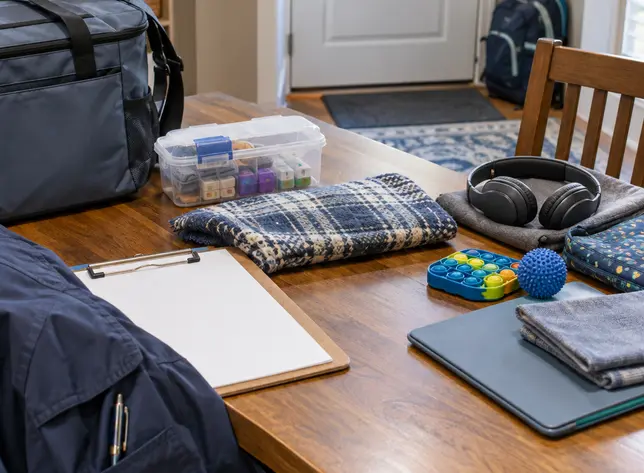
Before the Worker Arrives
Confirm arrival time and agreed tasks with the provider. Tell your parent who is coming in familiar terms: “Dana is coming to keep you company while I’m at the school.” Prepare a concise handoff covering:
- Meal times, preferred activities, and rest routines.
- Mobility support, including walker use and transfers.
- Food textures, allergies, and fluid reminders.
- Communication preferences and emergency contacts.
- The exact location of the medical summary and other essential records.
Confirm medication permissions. A worker booked for supervision may be authorized only to give reminders; medication administration must follow the provider’s rules and the parent’s clinical care arrangements. Write down who can prompt, give, or observe medication and how they will record completed tasks.
At Arrival and Afterward
Introduce the worker and your parent before leaving. Walk through the home together, pointing out the bathroom, care folder, and places where mobility support is needed. Show the records rather than assuming the worker will find them.
On return, ask your parent and the worker separately how the visit went. Record practical adjustments: lift the sticking gate latch first, arrive before lunch, or leave the radio on.
Put names and phone numbers beside backup responsibilities: school pickup, parent supervision, and contacting the provider after a no-show. Each person should agree to the assignment beforehand.
Put Caregiver Recovery on the Family Calendar
Persistent exhaustion, irritability, broken sleep, withdrawing from friends, and difficulty keeping up with routine tasks are reasons to revisit the care arrangement. Treat these changes as a prompt to redistribute work.
Replace “I need more help” with a bounded request: Thursday’s school pickup, Sunday dinner delivery, a ride to the eye appointment, or a defined period of parent supervision.
Match the assignment to the helper’s abilities. A neighbor can deliver meals or provide suitable companionship. Transfers, bathing, wound care, and medication administration need helpers with the appropriate training and authorization.
Use a regular family check-in to review upcoming appointments, uncovered periods, changes in your parent’s needs, and your own preventive care. Reserve part of respite for sleep, a walk, or time with a friend before adding chores. Recovery deserves a place beside everyone else’s appointments.
If distress or exhaustion interferes with daily functioning, talk with a healthcare professional. For immediate danger or thoughts of self-harm, contact local emergency services or a crisis line right away.
Turn the Care Plan Into a Covered Afternoon
Book the Relief
A usable plan has an updated medical summary, a short list of suitable respite options, a clear handoff, and named backup helpers. Start with the information needed for a safe trial.
- Complete the essential medical summary page.
- Contact a local service that matches your parent’s care needs.
- Confirm a trial arrangement and the agreed tasks.
- Place the covered period on the shared calendar, showing the time, caregiver’s name, and backup contacts.
Book one dependable period of relief before expanding the rest of the family care system.







Add a Comment