

Table of Contents
- Choose Drinks That Fit Each Family Member
- Notice Dehydration and Decide What Comes Next
- Use Water for Everyday Needs, Rehydration Solution for Illness
- Put Hydration Within Reach on a Warm Afternoon
Water Leaves the Body All Day
Every breath carries water out of the body. Water also evaporates through the skin, even when you cannot see sweat. Warm-weather play, exercise, and fever increase losses. Urination makes another part of that daily turnover visible.
Replacing those losses belongs throughout the day. Waiting until dinner leaves fewer opportunities to drink during a busy afternoon, especially when a child is absorbed in play or an older adult finds the kitchen difficult to reach.
The household task is practical: match drinks, reminders, and observation to each person's age, activity, and health. A shared drinking target misses those differences. Family health routines work better when everyone has an appropriate drink they can actually reach.
Choose Drinks That Fit Each Family Member
Babies Before Complementary Feeding
Breast milk or correctly prepared infant formula supplies hydration before complementary foods begin. Prepare formula using exactly the water-to-powder ratio on its label. If a baby seems dehydrated, seek clinical advice rather than offering extra water or diluting feeds. Watch their usual feeding, wet diapers, and alertness.
Children Learning to Eat and Drink
When complementary foods begin, offer small sips of water from an open or free-flow cup with meals while appropriate milk feeds continue. Notice whether feeding and wet-diaper patterns stay familiar.
For older children, connect water access to breakfast, packing the school bag, and after-school play. Fill the bottle before it goes into the bag; bring it out where the child plays. Notice whether they drink and urinate as usual.
Adults Moving Through Busy Days
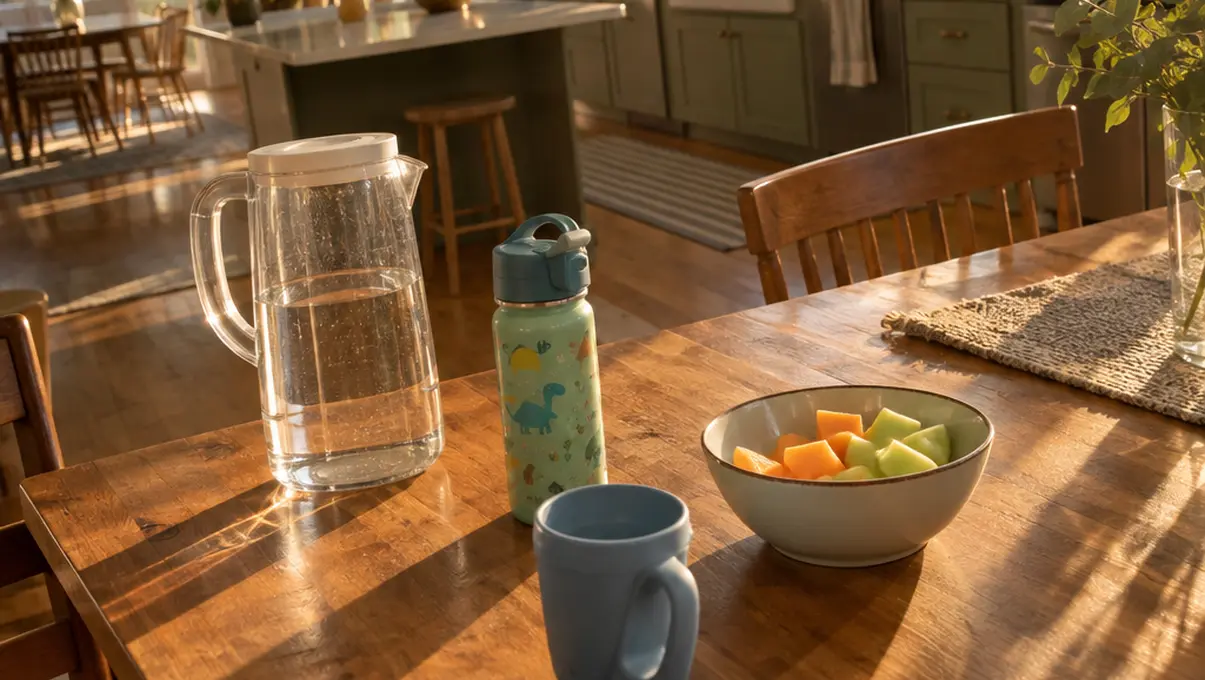
Drinks and water-containing foods both contribute to hydration. Water beside lunch, soup, and sliced melon can all fit into an ordinary day. Add drinking opportunities before, during, and after activity or heat exposure, and pay attention to thirst and changes in urination.
Older Adults Who Need Easier Access
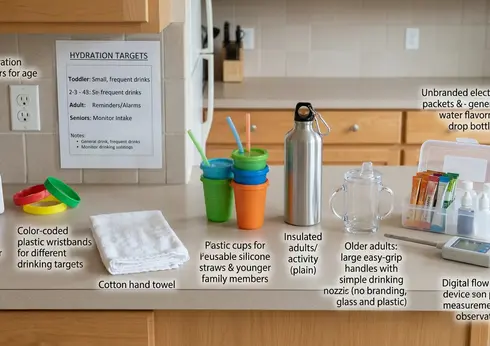
A full pitcher can be awkward for someone with weak grip or arthritis. Pour a drink into a lightweight, easy-grip cup and place it beside their usual chair. Offer fluids at meals and predictable pauses, and notice changes in drinking, urination, or energy. For anyone with prescribed fluid or sodium targets, build the routine around their care team's plan.
Notice Dehydration and Decide What Comes Next
A child comes inside tired after playing. Before deciding they simply need rest, check the surrounding clues: have they been drinking, is their mouth dry, and have they urinated as usual?
Look for several changes together:
- Thirst or a dry mouth.
- Darker urine or urinating less often.
- Fatigue, headache, or lightheadedness.
Medicines and supplements can change urine color, so assess it alongside drinking, urination frequency, and how the person feels.
Babies need a different kind of observation. Watch for fewer wet diapers than usual, fewer tears when crying, a dry mouth, or unusual sleepiness. Suspected dehydration in a baby calls for prompt medical help.
Let Alertness Guide the Immediate Response
For someone who is alert and swallowing normally, offer small, frequent sips and move them into shade or a cooler room. Seek prompt medical help for markedly reduced urination or vomiting that keeps returning.
Confusion, difficulty waking, or collapse requires emergency care. Stop offering drinks if the person cannot stay alert or swallow normally.
Use Water for Everyday Needs, Rehydration Solution for Illness
Electrolytes are minerals, including sodium and potassium, that help regulate fluid balance and support normal nerve and muscle function. Water and regular meals generally support ordinary daily routines.
Vomiting or diarrhea changes the task because the body loses fluid and electrolytes together. An oral rehydration solution may help replace those losses. Its balance of salts and sugar differs from sports drinks, juice, and soda.
For a child with vomiting or diarrhea, ask a clinician or pharmacist for an appropriate oral rehydration product and instructions. Mix it with exactly the volume of safe drinking water listed on the package, and follow its storage and discard directions. Energy drinks are unsuitable for rehydrating children because of their caffeine and sugar content.
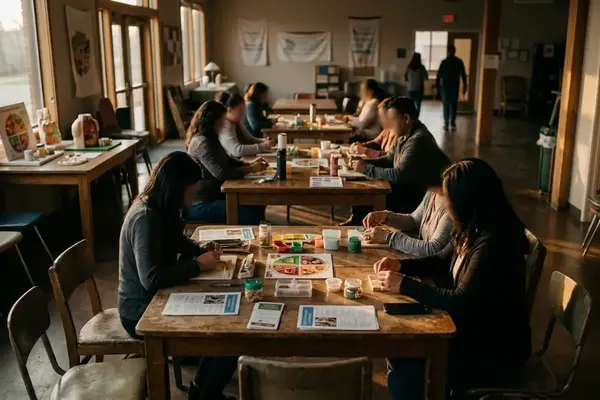
For everyday variety, try chilled water or water with cucumber, orange, or berries. Wellness education and health programs can make these choices easier to use by keeping practical resources close to the places families eat and play.
Put Hydration Within Reach on a Warm Afternoon
Choose age-appropriate fluids, keep them accessible, notice changes from normal, and respond early to illness or heat.

You are spending a warm afternoon at home with your school-age child and their grandparent. Build the routine around the kitchen, the chair, and the outdoor play area.
- Prepare before lunch. Put a water pitcher and individual cups on a low counter within your child's reach. Fill their refillable bottle before going outside.
- Carry the grandparent's drink to the chair. Pour it into a lightweight cup and set it on the side table. Leaving the cup beside the kitchen pitcher still leaves the drink two rooms away.
- Serve water with the meal. Include sliced melon or broth-based soup, then bring the bottle outdoors.
- Pause play in the shade. Offer drinks to everyone and ask whether anyone feels unusually tired, dizzy, or unwell.
- Respond when your child reports dizziness. Stop play and move indoors to a cooler room. Offer small sips only while your child answers clearly and swallows normally. If dizziness persists or worsens, seek medical help; if your child becomes confused or difficult to wake, get emergency care.






Add a Comment