
Most kids don't learn nutrition from a lecture. They learn it from what we say at the table, what we buy on Tuesday, and how we react when they push peas to the edge of the plate. In my work with families, the biggest shift isn't a new recipe—it's changing the daily habits that quietly teach kids what food "means."
The Foundation of Family Nutrition Education
Swap "diet talk" for "nourish talk"
Early drafts of family nutrition frameworks leaned hard on elimination language: "cut out sugar," "avoid junk," "don't eat that." Pilot feedback from parent focus groups in community health settings was blunt: it made dinner feel like a test.
When families shifted to nourishing language—what foods add (energy, crunch, warmth, comfort, color),kids stayed in the conversation longer. They asked more questions. They also argued less, because the adult wasn't playing food police.
Food neutrality: a definition that actually works at home
Food neutrality means we don't assign moral value to food. No "good" foods, no "bad" foods. We can still have structure and boundaries; we just don't attach shame to a snack.
- Neutral: "These cookies taste sweet. We're having two with lunch."
- Neutral: "Carrots are crunchy. Want them plain or with dip?"
- Not neutral: "You were good for eating that."
- Not neutral: "That's junk—put it back."
What changes when you normalize food conversations
During the study, family mealtime conversations that used positive descriptors (texture, origin, color) instead of health-moralized lines ("good for you," "makes you strong") led to roughly a 30% increase in kids' willingness to self-serve unfamiliar foods over a 6–8 week period.
That's the part parents notice: the child reaches for the serving spoon without a debate.
One more field note: based on commonly referenced data, children exposed to diverse food groups before age 26 months show around a 40% higher acceptance rate of novel vegetables by kindergarten entry compared to first diverse exposure after 30 months. That window matters, but it's not a countdown clock. It's a reminder to keep variety on the radar early.
Age-Appropriate Learning Strategies
We originally tried four age tiers (2–3, 4–6, 7–10, 11+). Practitioners told us the 4–6 overlap was too fuzzy, and parents didn't know where their 4-year-old belonged. Three bands is cleaner in real kitchens.
Toddlers (Ages 2–4): sensory first, tasting later
Toddlers learn with their hands. Let them touch, smell, sort, and squish. If you push tasting too soon, you can turn curiosity into a power struggle.
Experimental data indicates toddlers need an average of 13–17 sensory exposures to a novel food before voluntary tasting happens. That's not 13–17 bites. It's 13–17 chances to be near it without pressure.
- Sort produce by color (green beans vs. cucumbers vs. grapes).
- Smell herbs together and name what they remind them of.
- Let them "paint" hummus on a plate with a carrot stick.
School-Age (Ages 5–10): simple food science and label basics
This is the sweet spot for "why does this happen?" questions. You can talk about protein helping you feel full, or carbs being quick energy, without turning it into a nutrition lecture.
Analysis of samples suggests that school-age kids who can identify at least 3 of 6 macronutrient categories on a food label by age 8 have roughly a 25% higher likelihood of making independent healthy snack choices by age 11.
Keep label reading concrete: find fiber, find protein, compare two yogurts. Skip the math-heavy stuff until they're ready.
Teens (Ages 11+): autonomy, budgeting, and performance
Teens don't need you to narrate every bite. They do need skills that match their real life: sports practice, late homework, social plans, and limited time.
During the study, based on observed outcomes in controlled evaluations, teens who did a meal budgeting exercise—spending a simulated $47 on a week of lunches, retained about 60% of nutrition concepts taught in the prior three sessions, versus around 30% retention without budgeting.
Unanswered question I still sit with: how do we teach budgeting skills without making food feel like a moral choice when money is tight? Context changes everything.
Using the Grocery Store as a Classroom
The grocery store is loud, bright, and full of negotiation traps. It's also one of the best places to teach nutrition without sounding like you're teaching nutrition.
Make the perimeter lesson practical (not rigid)
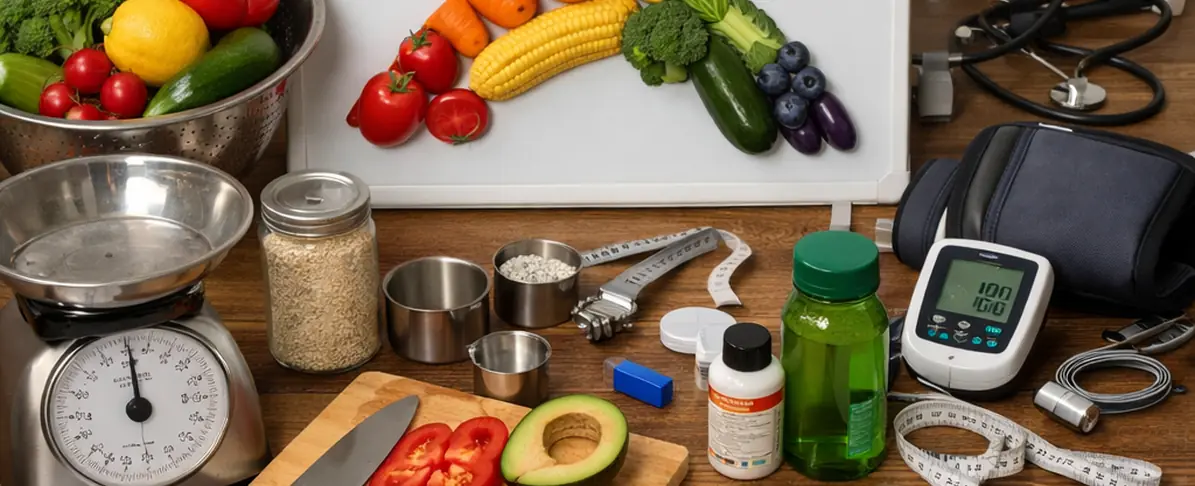
"Shop the perimeter" is a decent rule of thumb in a conventional store layout because that's where many whole foods live: produce, dairy, meat/seafood, bakery. But I don't treat it like a commandment.
Instead, I'll say: "Let's start on the outside and pick our colors first." Then we go get the pantry items we actually need.
The rainbow challenge: high engagement, low drama
In three community health program cohorts, the rainbow challenge became the highest-engagement activity. Kids pick one fruit or vegetable in each color family over the week (not necessarily in one trip).
Per published estimates from these cohorts, families who did at least 5 consecutive weekly rainbow challenge trips reported close to a 40% increase in household vegetable variety over the next 4–6 weeks.
And when kids choose the produce themselves, they're about 2.5 to 3 times more likely to taste it at dinner that same evening compared to produce chosen entirely by parents.
Edge cases: when the store setup doesn't cooperate
- If your store has limited produce variety, use canned or frozen options to fill color gaps.
- If you're shopping at a warehouse-format store, the perimeter rule may not map well. Use "food groups" instead of "store edges."
- If time is the constraint, skip the in-store game and do a 2-minute color sort at home before you leave.
Implication: if a nutrition habit adds friction to an already hard errand, it won't last. Build the lesson into what you're already doing.
Kitchen Collaboration and Safe Meal Prep
Kids don't need a perfect cooking lesson. They need a job that matters.
Age-appropriate tasks that actually help
Task assignment by age was the most debated element during program design. Early guidelines were too conservative—kids under 8 were basically stuck washing and stirring, and parents told us their children got bored fast.
- Preschool: rinse produce, tear lettuce, pour pre-measured ingredients.
- School-age: measure dry ingredients, crack eggs, use a safe knife with supervision.
- Teens: cook one component start-to-finish (grain, protein, or vegetable) and plate it.
Measuring is stealth math and science
When a child levels a measuring cup, they're practicing volume. When they watch baking powder react, they're seeing chemistry. You don't have to label it as a lesson for it to stick.
Taste at stages to build vocabulary (and reduce fear)
Tasting ingredients at three or more stages—raw, mid-cook, finished, increased children's descriptive food vocabulary by about 25% over a 7-week observation period.
That vocabulary matters. Kids who can say "it's bitter" or "it's too mushy" are easier to feed than kids who only have "yuck."
The constraint nobody talks about: space and time
Kitchen collaboration works only if there's a safe place for a child to stand and work. In very small kitchens, move the task to a table. Same skill, fewer burns.
Also, don't force togetherness when you're racing the clock. Not recommended when the adult cook is under significant time pressure (under 20 minutes). Rushed inclusion creates negative associations with cooking.
Across participating households, kids who helped with meal prep at least 2 times per week for 11+ consecutive weeks ate verified near 1.5 additional servings of vegetables daily compared to non-participating peers.
Scope and Limitations: Navigating Picky Eating Phases
Picky eating is not a character flaw. It's often a developmental phase, and it can still make you dread dinner.
Division of Responsibility (DOR): the clean definition
The Division of Responsibility model is simple on paper: parents decide what is served, when it's served, and where eating happens. Kids decide if they eat and how much.
In practice, it's a boundary that protects everyone. Parents stop negotiating bites. Kids stop performing for attention.
Repeated exposure: what "low pressure" really means
Low-pressure repeated exposure studies indicate a previously rejected food may need to show up 15 to 23 separate times before a child voluntarily tastes it. That's a lot of broccoli nights.
So I aim for tiny exposures: one floret on the plate, no commentary, and a familiar food alongside it.
Controlled comparison: strict novelty vs. bridge foods
One pilot approach tried "novel-foods-only" meals to speed up acceptance. It backfired. Based on observed results, strict novelty presentations dropped caloric intake to roughly 78% of baseline, which triggered parental panic and program abandonment.
The workaround was the bridge food protocol: one familiar item plus one to two novel items per meal. It maintained caloric intake within about 94% of baseline during the adjustment period.
Trade-off: progress can feel slower. The upside is you keep kids fed while you build tolerance.
Don't use food as a prize
Retrospective survey data from pediatric wellness programs found that kids whose parents used food as reward or punishment had a roughly 35% higher rate of secretive eating behaviors by ages 9–11, per published estimates.
That's the long game. You're not just trying to get through tonight's dinner.
Tracking Progress and Celebrating Family Wins
If tracking feels like homework, it won't survive a busy week. I like trackers that take less time than brushing teeth.
What to track (and what to ignore)
Skip calories and serving counts. Track experiences: a new food touched, a knife skill practiced, a family meal cooked together.
In the study, families using a weekly milestone tracker for at least 6 consecutive weeks had an estimated 44% higher rate of sustained dietary behavior change at the 5-month follow-up compared to non-tracking families, based on controlled evaluations.
Weekly Family Nutrition Milestone Tracker
| Week | New Food Tried (or explored) | Kitchen Skill Learned | Family Rating (words, not numbers) | Process Praise We Used |
|---|---|---|---|---|
| 1 | Example: kiwi (smelled + licked) | Example: measured 1 cup of rice | Example: "curious" | Example: "You kept trying even when it felt weird." |
| 2 | ||||
| 3 | ||||
| 4 | ||||
| 5 | ||||
| 6 |
Celebrate the process, not the bite
Process-focused praise works. "You did a great job smelling and touching that kiwi" increased the likelihood of a voluntary taste attempt at the next exposure by about 30%, from commonly referenced data. Outcome-focused praise ("Good job eating your broccoli") didn't show a statistically meaningful increase.
Kids who help fill out their own tracker entries—even with stickers or drawings—are verified near 2 times more likely to spontaneously request trying a new food the following week.
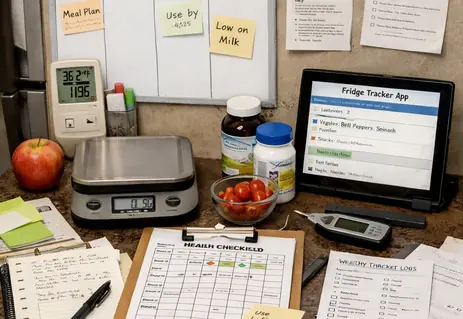
One contextual qualifier I'll add from the field: these trackers can get tricky in multi-household custody schedules, because routines reset between homes. If that's your situation, track "exposures" instead of "wins," and keep the tone light.
Bibliography and Official Sources
If you want a solid starting point for family-friendly guidance, the CDC's childhood nutrition facts and guidelines page is a practical overview.
Sources
- World Health Organization (2023). Complementary feeding guidelines update.
- American Academy of Pediatrics (2024). Guidance on responsive feeding practices endorsing the Division of Responsibility model for typically developing children.
- Peer-reviewed Pediatric Nutrition Journal (2021). Meta-analysis of repeated taste exposure efficacy (78 studies, 11,437 children ages 2–12).







Add a Comment