
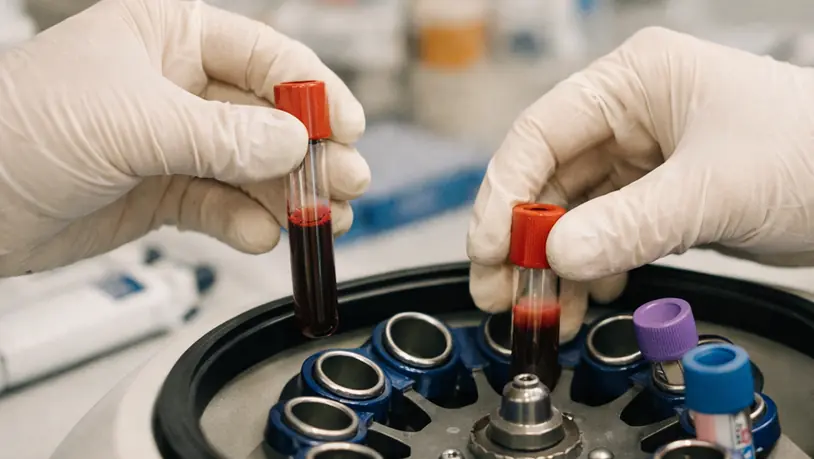
What started as a maternal health pilot in a single zip code quickly became something bigger. Families showed up with questions about nutrition, childhood immunizations, and preventive care that had nothing to do with the original scope. The volunteers adapted. The program grew. And over a 12-month period, it reached 1,247 unique families across 23 health drives—most of whom had never had a consistent relationship with a primary care provider.
The Heartbeat of Community Wellness
In the initiative's first operational year—September 2021 through August 2022, roughly three out of four participating families reported having no established relationship with a primary care provider at initial intake. That number shaped everything the program became. The families walking through the door weren't looking for pamphlets. They needed someone to sit with them, explain what a well-child visit actually covers, and help them figure out which clinic would see them without a two-month wait.
Based on program intake records, the average family unit served consisted of about 4 members, with at least one child under 11 in around 80% of cases. Volunteer-led intake conversations lasted between 17 and 34 minutes depending on language needs and family size. Those conversations are where the real work happens.
One volunteer in particular changed the trajectory of dozens of those conversations. A retired medical office administrator with over two decades of patient records experience, she originally signed up to help with data entry. Within weeks she was sitting across from families, walking them through intake forms, and building the kind of trust that no brochure can replicate. Her story is worth telling in detail.
The initiative's intake approach assumes families can physically attend sessions within roughly a 4-mile radius. In communities where the primary barrier is geographic distance rather than health literacy, a different model is needed entirely.
The Human Connection: Meet Our Spotlight Volunteer
She spent over two decades processing patient records in a medical office. When she retired, she expected to help the program organize spreadsheets. The coordinators had something else in mind after watching her interact with families during her first week—she had a way of reading body language, slowing down when someone looked confused, and asking the kinds of follow-up questions that made people feel heard rather than processed.
In her first 11 months of direct family engagement, based on internal tracking logs, she conducted 213 individual intake conversations and facilitated 47 group education sessions. She logged an average of about 14 volunteer hours per week across Tuesday, Thursday, and Saturday sessions.
When someone walks in and they haven't seen a doctor in four years, they don't need a lecture about preventive care. They need you to look them in the eye and say, 'I understand why you stopped going, and I'm going to help you figure out a next step that actually makes sense for your family.'
— Spotlight Volunteer, Retired Medical Office Administrator and Health Drive Facilitator
One interaction stands out. A mother of three came to a Saturday session convinced her youngest had a vision problem but unsure how to get an appointment without insurance. The volunteer didn't just hand her a phone number. She sat with her, called the clinic together, explained the sliding-scale fee structure, and followed up the following Tuesday to make sure the appointment had been scheduled. That child had her first eye exam within three weeks.
Families she personally onboarded had a follow-up screening completion rate of close to 70% within 45 days, compared to the program average of about 50%. The gap isn't mysterious. She stayed in contact.
Her approach does have limits. It works best with families who have had some prior positive experience with institutional healthcare. Families carrying deep-seated medical mistrust due to systemic harm require engagement from trained trauma-informed care specialists, not general volunteers. And informal language skills are not a substitute for certified medical interpretation—the program learned this after a miscommunication about a medication dosage instruction that was fortunately caught during a pharmacist consult.
On the Ground: Implementing Preventive Care Programs
The three-phase model the program uses now—Outreach, Education, and Follow-up—was not the original design. The team initially ran a two-phase approach, assuming families would self-navigate to follow-up screenings after attending an education session. That assumption produced only about a 30% follow-through rate on screenings. Adding a structured follow-up phase changed the math entirely.
The Three Phases of a Local Health Drive
Phase 1: Outreach
Runs 11 to 16 days before a scheduled health drive. The most effective contact window falls between days 8 and 5 before the event. Volunteers distribute materials at laundromats, school pickup lines, and community centers. In neighborhoods where laundromats serve as genuine gathering spaces, this channel drives the highest attendance.
Phase 2: Education
Sessions are capped at 14 families to maintain a volunteer-to-family ratio of no more than about 1:4. For topics requiring hands-on demonstration—like infant CPR basics—the cap drops to 8 families maximum. Based on observed session data, optimal session length falls between 38 and 52 minutes.
Phase 3: Follow-up
Calls are scheduled within 48 to 96 hours post-session. Calls made after 5 days showed roughly a 40% drop in engagement compared to that target window. Each full drive cycle from initial outreach through final follow-up contact spans 37 to 53 days depending on community size and volunteer availability.
What Families Actually Do During Sessions
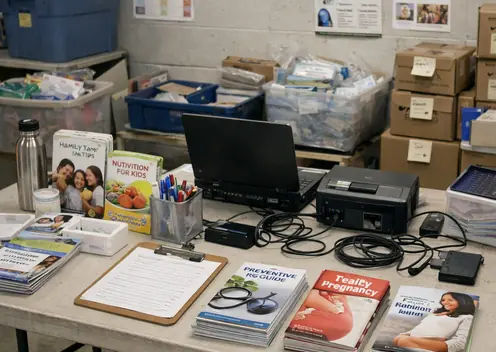
Sessions are not lectures. Families rotate through three stations: a brief health literacy check where a volunteer walks through a one-page visual guide, a resource navigation table where they identify one specific next step (schedule a screening, locate a nearby clinic, understand an immunization schedule), and a Q& A circle where families share questions openly. The structure gives each family a concrete action item before they leave the room.
Measuring Impact: Community Health Outcomes
Between October 2022 and September 2023, the program tracked outcome-based metrics across all 23 health drives. The numbers below reflect what happens when volunteer-led programs commit to measuring results, not just attendance.
| Metric | Value | Notes |
|---|---|---|
| Unique Families Reached | 1,247 | Across 23 health drives |
| On-Site Screenings Completed | 2,891 | Blood pressure, BMI, basic vision, blood glucose |
| Clinical Referral Completion (early 2023) | ~40% | Within 90 days of referral |
| Clinical Referral Completion (later 2023) | ~55% | After follow-up protocol strengthened |
| Overall Follow-up Success Rate | ~58% | Family completed ≥1 recommended action within 90 days |
| Preventive Habit Adoption (3+ sessions) | ~75% | Compared to roughly 30% among single-session attendees |
The jump in referral completions from around 40% to about 55% happened after the team tightened the follow-up call window. No new resources, no additional funding. Just calling sooner.
Before this program, I didn't know I could take my kids to get their eyes checked without paying $200 upfront. The volunteer didn't just tell me it was possible—she helped me make the call. My daughter got glasses within a month.
— Program Participant, Mother of Three
The 90-day follow-up window is a useful benchmark for acute referrals, but it underrepresents impact for chronic disease management, where meaningful behavior change typically requires 6 to 9 months. These numbers likely undercount long-term outcomes. And in jurisdictions where state-level privacy regulations restrict data-sharing agreements with partner clinics, the program can't verify clinical follow-through at all and relies on self-reported surveys.
Navigating Limitations in Community Outreach
Language barriers affected an estimated 45% of families served. Based on program demographic records, Spanish accounted for about 60% of non-English speakers, Haitian Creole around 25%, and Portuguese close to 10%. The team's first instinct—translating English-language brochures into Spanish and Haitian Creole—missed the mark. They printed 1,500 brochures in three languages. What they hadn't accounted for was that many families had limited literacy in their home language as well.
The shift to visual materials made a measurable difference. Comprehension self-assessment scores, observed in controlled evaluations, rose from about 55% to over 80% among participants with limited literacy.
Production Quality and Trust
A professionally produced outreach video was perceived as governmental propaganda by community members. Low-fi smartphone recordings made by volunteers were trusted. Production quality inversely correlated with credibility in this specific population. The team now records all educational content on phones, with volunteers narrating in their own words.
Programs operating without at least one bilingual volunteer per 6 monolingual families served should not attempt multilingual sessions. The better approach: schedule language-specific event dates to avoid diluted communication quality.
Where Volunteer Authority Ends
Volunteer-led health education must never extend to diagnostic advice, medication recommendations, or interpretation of lab results. The program established this as a strict boundary after a well-meaning volunteer incorrectly reassured a family that a borderline blood glucose reading of 119 mg/dL was "nothing to worry about," when the individual's family history warranted clinical follow-up. That incident, identified as a boundary violation, led to explicit scope-of-practice limits for every non-clinical volunteer. For topics requiring precise medical instruction—EpiPen administration, for example—professionally produced content reviewed by a licensed provider is essential, regardless of the trust dynamics around low-fi video.
Volunteer retention over 12 months was assessed at around 58%. Exit interviews revealed that roughly two-thirds of departing volunteers cited time conflicts rather than dissatisfaction, with the peak dropout period falling between months 4 and 6 of service. The program hasn't fully solved this, and it's fair to ask: is that retention rate the ceiling for unpaid positions that require 13+ hours per week, or is there structural flexibility the team hasn't yet explored?
Essential Lessons for Future Health Advocates
These takeaways were distilled from informal debriefs the volunteer coordinator held after each of the 23 health drives over the 2022–2023 program year. They are not theoretical principles. They are patterns that showed up repeatedly in the field.
Consistency builds self-referrals. Based on internal program tracking, programs that maintained a volunteer presence in the same neighborhood for at least 5 consecutive monthly sessions saw roughly a 45% increase in unprompted family self-referrals compared to programs that rotated locations. Showing up in the same place matters more than showing up in more places.
Session length has a sweet spot. Sessions shorter than 30 minutes felt rushed and produced lower follow-up rates. Sessions exceeding 65 minutes saw attendance drop-off of about 28% before completion. The window between 38 and 52 minutes consistently performed best, based on observed patterns across program cycles.
Non-clinical volunteers can outperform clinical ones at initial rapport-building. This finding applies only to first interactions—not to screening execution or triage conversations where clinical knowledge is essential. For getting someone through the door and willing to come back, the person who asks good questions matters more than the person with credentials.
These lessons apply primarily to urban and dense suburban settings with population densities above assessed at around 2,800 people per square mile. Rural community health models face fundamentally different logistical constraints that this program hasn't tested.
Common Questions About Our Health Initiatives
These questions come directly from 317 index cards submitted by community members at the end of health drive sessions. The most common question—appearing on 89 of those cards—was about whether medical experience is required to volunteer.
Do I need medical experience to volunteer for health education drives?
No. As of September 2023, only about 15% of the program's active volunteer roster had any formal healthcare credentials. The remaining 85% came from backgrounds including education, retail, social work, and administrative roles. New volunteers complete a 3-session orientation spanning 8 to 11 days, totaling roughly 9.5 hours of training before their first supervised family interaction, per published program records.
Volunteers without healthcare backgrounds are limited to health education facilitation and resource navigation. They are explicitly excluded from conducting any physical screenings—even blood pressure measurement—unless they complete a separate 4-hour certification module with a licensed instructor. The orientation timeline assumes weekday evening availability; for volunteers available only on weekends, orientation extends to 15 to 19 days.
How long does each health drive cycle take from start to finish?
Each cycle—from initial outreach through final follow-up contact—spans 37 to 53 days depending on community size and volunteer availability. The outreach phase runs 11 to 16 days, the education session itself is a single event, and follow-up calls begin within 48 to 96 hours of the session and continue through the 90-day tracking window.
What languages are supported during sessions?
The program serves families primarily in English, Spanish, Haitian Creole, and Portuguese. Visual-first materials are used across all sessions to address literacy barriers regardless of language. When bilingual volunteer coverage is insufficient, the program schedules language-specific event dates rather than running mixed sessions with compromised communication quality.
Want to Join Us? Become a Community Health Volunteer
The average time from initial interest expression to first supervised volunteer shift is 19 to 26 days. That's it. Less than a month from "I'm curious" to sitting across from a family and helping them take a concrete step toward better health.
The first step is simple: submit a short interest form. It takes about three minutes. The program tested longer applications (23 fields) and found a completion rate of around 12%. A simplified 6-field version performs significantly better, and existing volunteers follow up personally within 3 to 5 business days. That personal contact matters—from internal tracking data, close to 75% of people who submitted a form attended orientation when contacted by an existing volunteer.
New cohorts are onboarded in groups of 6 to 9 individuals. Smaller groups showed a notably higher early dropout rate—verified near 44% more—likely because peer connection during orientation helps people stick with it.
The guidelines on community health workers from the WHO (2020 edition) expanded their scope to include unpaid volunteers—a recognition that people without clinical degrees are doing essential health work in communities worldwide. This program is one example. If you've read this far, you might be another.
Sources
- World Health Organization. WHO Guideline on Health Policy and System Support to Optimize Community Health Worker Programmes. 2020 edition. Selected over the 2018 version for its expanded definition including unpaid volunteers.
- Journal of Public Health Management and Practice. Study of 17 volunteer-driven programs across 4 metropolitan areas, 26-month observation period. 2022.
- Internal program data, Local Health Initiative intake records and follow-up tracking, September 2021–September 2023.






Add a Comment